


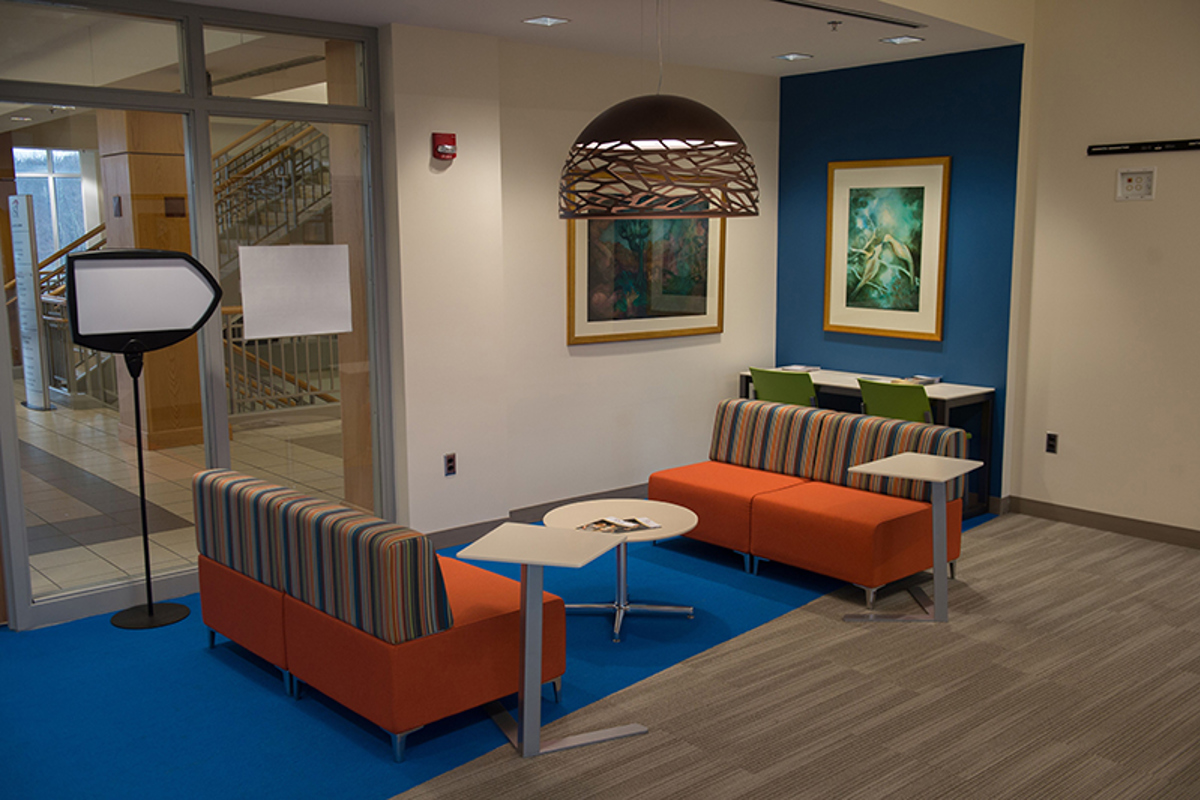
Advising centers provide consistency to advising processes
New Liberal Arts Advising Center opened fall 2015.
On average, 30 percent of college students drop out during their first year. Students who have clarity in requirements needed for their major and core classes, and who understand the opportunities and resources available to them are much more likely to continue past their first year and ultimately complete their degree. Through new advising centers, USI has increased retention efforts by providing resources to alleviate anxieties and uncertainties, and to facilitate communication and provide guidance.
Beginning with the University's strategic plan meetings in the 2009-2010 fiscal year, the decision to have designated advising spaces in each of the four colleges was made in order to better serve first year students and increase retention. The College of Nursing and Health Professions was the first to introduce an advising center in fall 2012. The following spring, the doors opened to the Pott College of Science, Engineering, and Education Advising Center; followed in spring 2015 by the Romain College of Business; and the newly opened Liberal Arts Advising Center in fall 2015. Each of the Centers is staffed with full-time advisors during normal business hours and has a director who coordinates with University Division liaisons to establish and meet goals.
In most cases, after students complete their first year, they transition to a faculty advisor. Brody Broshears, assistant vice president for academic success, says the goal is to improve the advising process throughout the curriculum. "We want to work with faculty; they're tremendous partners in this process. Improving the transition from the centers to faculty advisors and academic departments, and finding ways for the centers to better support faculty advisors are important goals as the centers continue to evolve," he said.
 That students understand advising is more than creating class schedules is crucial. "We want students to make good, informed decisions about their academic lives," said Broshears. "Our goals are centered on good exploration and confirmation strategies in the first year, and making certain students get connected to faculty in their academic programs of interest early on." The advising centers create a consistent advising experience across campus, build beneficial alliances, and foster a central understanding of advising processes.
Beyond scheduling classes, the teams answer questions about coursework, aid major and career exploration, keep degree plans on track, communicate with students who are struggling, evaluate the drop/add process, monitor academic progress, help students who are in transition or questioning their academic choices, and promote internships and study abroad opportunities.
Early assessments of the centers have shown high student satisfaction in not only the service, but also a greater understanding of both degree and core curriculum requirements. Broshears says this resource also reassures parents. "We know students choose universities primarily based on academic programs, but parents and family members want them to get the support they need to be successful - that's where the advising centers fit into the equation."
Location and directors of the advising centers:
- College of Nursing and Health Professions, second floor of the Health Professions Center, Room 2023, Dr. Sarah Stevens
- Pott College of Science, Engineering, and Education, third floor of the Education Center, Room 3104, Dr. Keith Powers
- Romain College of Business, first floor of the Business and Engineering Center, Room 1015, Kristina Walker
- Liberal Arts, third floor of Liberal Arts Center, Room 2001, Renee Rowland.