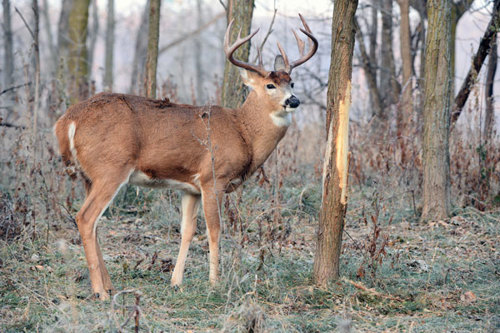
If you've ever seen trees with bark rubbed off or branches broken at about chest height, you were probably looking at signs left behind by a white-tailed deer. These marks come from bucks (male deer), and they are closely connected to their antlers and something known as velvet.
Antlers are unique to deer and take a lot of energy to grow each year, so they serve an important purpose. While they can be used for defense, their main role is actually in competition with other males. Bucks use their antlers to spar, show dominance, and establish social ranking, especially during breeding season. Larger antlers often signal that a deer is older and stronger, which can help attract females and intimidate other males.
Before antlers fully harden, they are covered in a soft, fuzzy layer called velvet. Velvet is full of blood vessels and nutrients, which help the antlers grow rapidly during the spring and summer. In fact, antlers are one of the fastest-growing types of bone in the animal kingdom. The velvet basically acts as a support system, bringing the antlers anything they need while they develop.
By late summer, antlers finish growing and begin to harden. At this point, the blood supply to the velvet is cut off, causing it to dry out and die. This is when the bucks begin rubbing their antlers against trees and shrubs. These marks on trees show where the buck has tried rubbing off the velvet and can usually get their entire antlers done in as little as a day. While it may look destructive, this behavior is completely natural and actually signals that the deer is entering breeding season.
Tree rubbing doesn't just remove velvet! This practice also plays a role in communication between deer. As bucks rub trees, they leave behind scent from glands on their heads. This acts as a signal to other deer, marking territory and showing dominance. In a way, these marks are like messages that tell the other bucks to stay away and let females know a strong male is nearby.
Overall, antlers and velvet are essential for a deer's life and definitely not just for show. These features helps bucks grow, compete, communicate and reproduce. Next time you see a tree rub, you'll know it's an important part of a deer's life.