A Word from the Dean
I needed a haircut, so I went to the barbershop early one morning. It was a new place that had just opened. As usual, I walked in with a novel because you never know how long the wait might be.
Turns out that I was first in, so the barber—a young man no more than 30 years old—said, “I can take you now if you’re ready.”
I sat down in the chair with my book on my lap.
“What are you reading?”
“Oh, some novel about ancient Rome.”
“First triumvirate or second?” he asked. “I just finished a novel about the first, but I’m curious about Augustus.”
We proceeded to talk about Roman history, Stoicism and Dante’s Inferno. Soon he ran out of hair to cut, and so our conversation came to an end. But what the what? I couldn’t believe the conversation that we had. It was not even 7 a.m. on a Saturday morning and this man had chopped the outside of my head while working on the inside.
When he swiveled me around in the chair, I saw that he had done an artisanal job on the sorry canvas offered by my aging head. I walked out of the shop feeling great about him. He never said he was a future, current or former student. He was, far as I knew, just a curious guy who cut hair and read books.
___
In my role, I interview a lot of job applicants. In former days, I used to ask a lot of questions. Nowadays, I ask very few. Instead, my main goal is to tell a story —my favorite USI story— and observe how people take it in. It’s the origin story, and it’s worth recounting now.
Back during World War II, Evansville became a hub of military-industrial production. We produced Thunderbolts and LSTs. The latter played a role in decisive battles like Normandy. The city was proud of its fighting spirit and its contribution to the effort.
After the war, that market tanked and a long economic malaise settled in. Manufacturing diminished. As firms like Chrysler, International Harvester and Hoosier Cardinal shuttered or moved elsewhere, Evansville lost upwards of 20,000 jobs.
And then, in the early 1960s, some local business leaders figured out a way forward. Evansville, these leaders decided, needed an affordable public option for higher education. But their idea met with resistance across the state and even here in Evansville. Many of these civic leaders possessed no formal education themselves, but understood the value of a college degree and what that kind of education would mean for the region.
Let’s sit with that fact for a moment and appreciate it.
In spite of the resistance they faced, these leaders channeled that old fighting spirit and held fast to their cause. The decisive moment seems to have come in February 1965, when Mayor Frank McDonald backed the idea at a public meeting on the topic. Few knew that, at the time, McDonald was negotiating an agreement with Indiana State to open a branch campus here. He announced the deal two months later, in April, and that Fall, just over 400 students were enrolled in the fledgling institution in the old Centennial School building leased from area businessman D. Mead Johnson for $1 a year. There were no labs, screens or HVAC systems, and only two full-time faculty members.
You probably know the rest. ISU-E became USI in 1985, which meant it stood on its own two feet and became its own place, i.e., no longer the little sibling.
I wasn’t here for any of that, but I know the story thanks to people like David Bower and Jennifer Greene, who schooled me on our history. I’m proud to be part of this place and this story. When I hear, in our alma mater what? Song? Pledge?, that we are “on these grounds by the people, for the people endowed,” I’m inspired because it jibes with the feeling I get walking around campus. And that’s why I like sharing this story with others.
Have a good summer, everyone.




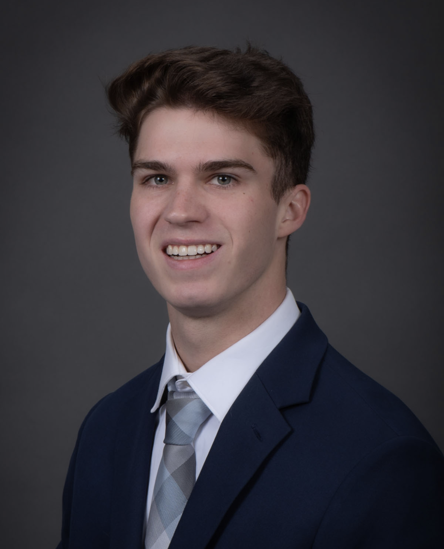
 Nicholas Smith ‘17