Del Doughty, Ph.D.
Dean, College of Liberal Arts
When I heard Senator Bernie Sanders and Steve Bannon recently shared a podium at a “Pro-Human Assembly” event in Washington, D.C., to warn of the dangers about artificial intelligence, it caught my attention. Sure, they each had their reasons for pushing back on the current direction and pace of AI development, but these are some pretty strange bedfellows indeed. Or maybe not so strange after all. They’re both Americans, and when it comes to the subject of AI, many Americans are increasingly anxious, concerned or downright freaked out about what is happening in that field. This growing number includes some of the tech titans and industry insiders themselves, who are, curiously, taking to the essay genre to warn of risks and hazards.
Here in the College of Liberal Arts, we are exploring AI in our various disciplines and keeping tabs on the conversations that our culture is having about it. Maybe AI will in fact be revolutionary and “change everything,” but we remember when people made similar claims about other tech innovations. Maybe AI will end up being just the next item in the series that includes Netscape 2.0, MySpace, Google Glass and the Segway. Okay, probably not that lame, but we’ll see.
In the meantime, here’s what we do know: humans will need to continue to learn and know things. We will need to embrace our uniquely human attributes and cooperate with each other. And to do that, we’ll need to cultivate the skills and dispositions that build bonds of trust and collaboration, which form networks and friendships. And that’s why we’re leaning heavily into relationship-rich education. That’s not a new idea, but something we started about two years ago here. We began implementing that approach with incoming freshmen last year, and this year we’ve taken a further step by opening The Link Networking Resource Center. Located on the first floor of the Liberal Arts Center, the Link is a resource for students to acquire and develop their professional networking and relational skills. We like to say that what students choose to study in college is, of course, important, but the networks they build and leverage can be just as important—if not more so. That’s as true for poets and artists as it is for journalists, historians or social workers. And if that’s true, it’s too important to leave to chance. Dr. Andy Buck, Professor of Sociology, is our founding director of The Link, and I’m pleased to be working alongside him with the team he’s putting together. One of Dr. Buck’s research specialties, social network analysis, makes him a natural fit for this role.
Personally, I think investing in humanity in the time of AI is a smart bet. If you know me, you know I love the Stoic philosophers, especially Marcus Aurelius. I’ve read Meditations many times. The first couple of times I read it, I skipped right past the first chapter, which just looked like a long list of acknowledgements to me. Boring. But then some years ago I changed my mind about that. I now think the first chapter is amazing. Marcus goes through a long list of people who taught him something. He’s very specific about what debts of gratitude he owes to whom. Reading it, you understand Marcus Aurelius saw himself not as an isolated, self-made man but as a product of and still in his day very much part of a network of friends, mentors and fellow travelers. Two thousand years later, his recognition of that connectedness endures and inspires. It’s an important reminder that even as things change, sometimes at a dizzying pace, there are certain things that remain of enduring value.
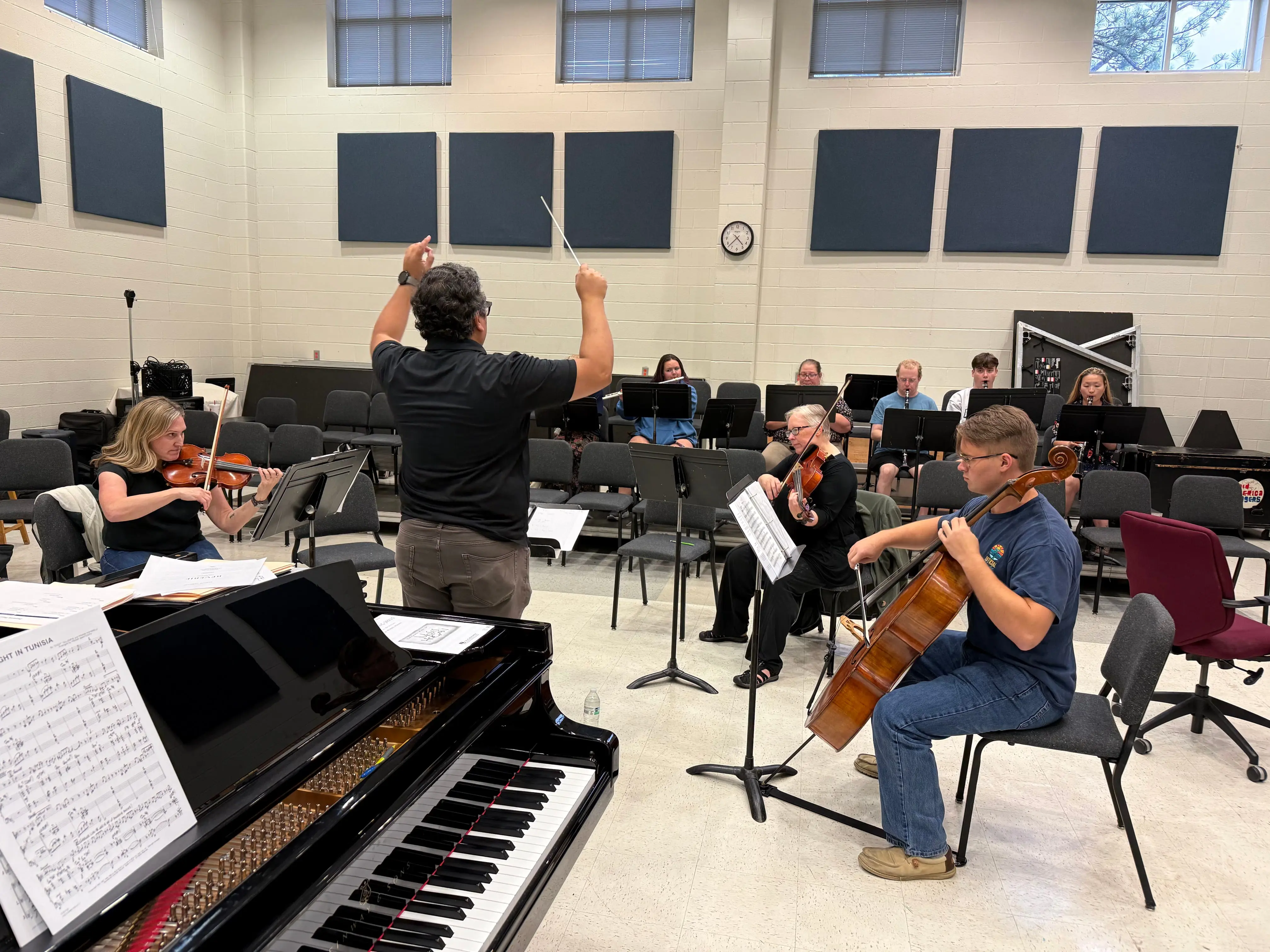
The College of Liberal Arts is excited to welcome the USI Orchestra, which launched this Fall Semester with around 20 members in its inaugural ensemble. The orchestra provides an opportunity for USI students, faculty and staff to continue their passion for making music and playing the instruments they have enjoyed throughout their lives.
As a growing campus and community ensemble, the USI Orchestra invites musicians of all experience levels to come together, build repertoire and make music.
Rehearsals: Tuesdays, 4:30–6 p.m.
Interested in joining? Fill out the interest form
Creativity doesn’t stop at graduation.
That was evident when 43 University of Southern Indiana Art and Design alumni returned to campus for “Still Creating,” a special event celebrating creativity, connection and the lasting impact of a USI visual arts education.
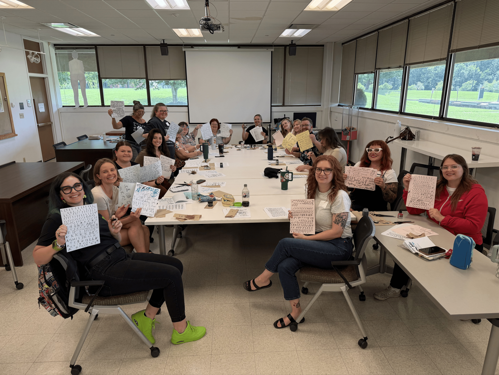 The alumni represented nearly five decades of USI graduates, ranging from the Class of 1978 to the Class of 2026. Attendees traveled from as far away as Indianapolis and St. Louis, and the gathering included a mother-daughter pair of alumni and a former Efroymson Fellow who now lives in Florida.
For many, the event was a long-awaited opportunity to reconnect with former classmates and professors while seeing how the department has grown.
“‘Still Creating’ was a much-needed and long-overdue meet up!” said Kristina Arwood ’13. “Getting to see former classmates and instructors again (after way too many years), meeting new faculty members, trying out different art workshops with our fellow creative graduates and touring all the updates to the department was so fulfilling.
The day brought alumni back into the classroom through hands-on workshops led by USI faculty and instructors. Dr. Greg Blair, Associate Professor of Art and Design, led two sessions focused on creating zines, while Dr. Sara Christensen-Blair, Chair of Visual and Performing Arts, introduced participants to calligraphy. Justin Kramer, Assistant Professor of Art, led a parquetry panel workshop; Sophia Okotah, Assistant Professor of Art and Design, hosted a crafting and conversation session; and Chuck Armstrong, Associate Professor of Graphic Design, guided alumni in creating USI-themed letterforms for a custom typeface.
For alumni, the workshops provided an opportunity to learn something new while reconnecting with the creative environment they experienced as students.
“I really enjoyed being back in a classroom of like-minded people, rekindling my love of design and also learning something brand new in a medium I didn't get to explore while I was a student,” said Kira Long ’12. “Being around other creative individuals is not something I often get to do, so it was great to just be back in that environment.”
Jennifer Greathouse-Nance ’04 M’12 also appreciated the opportunity to step back into the role of a student.
“My favorite parts of the event were connecting with fellow alumni, the nostalgia I had going back into the classroom, getting the opportunity to be creative and learning new things during the workshops,” she said.
The event also gave alumni an opportunity to tour the department and see new equipment, technology and opportunities available to current students.
“I had a great time reconnecting with old professors and meeting new ones,” said Heather Vaught ’10. “Seeing the improvements to the tech center and all around campus was pretty amazing!”
For others, returning to campus brought back memories of friendships and experiences that have continued to influence their lives.
“I’d have to say that it was just so great getting to see so many of my classmates once again for the first time since graduation—over a decade ago for me,” said Matt Koewler ’15. “I left the weekend with my heart full to bursting because I didn’t realize how much I missed seeing everyone.”
The celebration continued with a reception in the MAC/Pace Galleries, followed by an informal gathering at Barker Brewhouse.
The response from alumni was clear: “Still Creating” should not be a one-time event.
“It was an amazing experience. I hope they have it annually,” said Jenna Citrus ’15. “It felt so good to see how my college has grown and how my classmates have too! It felt great and inspiring to reconnect with the staff and fellow alumni.”
For alumni, the event was a reminder that while careers and lives may take them in different directions, the creative community they found at USI continues to connect them.
“I can’t imagine a world in which I wasn’t creating, or a world without art and design in general,” Long said. “We consume so much art and design on a daily basis without even realizing we are doing it because it’s become such an integral part of our human existence.”
The Art and Design Department was renamed and combined with the Theatre Department to become the Visual and Performing Arts Department in Fall of 2026.
For Jean Blanton, a 2001 graduate with a degree in Political Science and Public Relations and Advertising, a visit to the University of Southern Indiana during Fall Break changed the course of her life.
 Originally from northeastern Pennsylvania, Blanton grew up in the Wilkes-Barre/Scranton area before moving to Indiana and graduating from Southmont High School. She began her college career at Purdue University, but one trip to Evansville made her rethink her plans.
"I visited USI and Evansville for the first time while on Fall Break during my first semester of college at Purdue," Blanton said. "I very quickly fell in love with the campus."
She returned to Purdue considering a transfer and, by the start of her second semester, had made USI her new home.
Once on campus, Blanton immersed herself in student life and quickly discovered opportunities to grow as both a leader and a student. She served as an AMIGO (a former acronym for USI student guides which stands for "Ask Me, I Give Orientation”) during the summer after her sophomore year, an experience that introduced her to Gamma Phi Beta as the sorority established its chapter at USI. Blanton became a member of the sorority's inaugural Executive Committee during her junior year before serving as Chapter President as a senior.
She also revived the Pre-Law Club after becoming a political science and advertising and public relations double major, serving as the organization's president while developing leadership skills that would continue to benefit her throughout her career.
Blanton's academic journey continued to be anything but traditional. She originally entered USI as a biology major with plans to attend medical school. As her interests evolved, so did her career goals.
"I made the decision to go to law school and immediately chose political science," she said. "I also knew I needed to strengthen my writing skills."
That realization led her to add a second major in advertising and public relations.
"Advertising and Public Relations was the perfect major to meet that goal," she said. "It ultimately provided the foundation for future legal writing and has assisted me throughout my career as I have helped clients, nonprofit boards and employers solve problems."
One conversation with a professor proved especially transformative.
Former philosophy professor Dr. David Drebushenko taught the Introduction to Ethics course that ultimately altered Blanton's future. After she participated in a semester-long debate, he asked her to stay after class.
She began researching the law school admissions process, purchased an LSAT practice book, and discovered she had both the aptitude and passion for pursuing a legal career. She shifted her coursework toward the liberal arts, eventually completing a double major and laying the foundation for her future profession.
While her career has been rewarding, Blanton says her greatest joy after graduation has been the life she built with her husband, Jared, whom she met while attending USI.
Together they have raised two children, Haley and Jack, and recently celebrated their 20th wedding anniversary by returning to Alaska—the destination of their honeymoon—with their family.
Professionally, Blanton says some of the greatest challenges have come during times of career transition.
"When change occurs, it causes initial stress," she said. "However, we have both been very fortunate and have seen hard work, experience and relationship building lead to very positive opportunities and ultimately a very happy and rewarding professional and personal life."
Looking back, Blanton encourages current students to take advantage of everything USI has to offer while preparing themselves for life after graduation.
"Immerse yourself in campus life but also work hard academically and in building your résumé," she said. "You need to demonstrate to future employers that you have leadership skills, are a team player, are willing to work hard, can think creatively and will always add value."
As a first-generation college student, Blanton says USI became much more than the place where she earned her degree.
"I found my home at USI," she said. "USI was a turning point for me in my life as a first-generation college student, and my time at USI and my continued connection as an alum have provided many opportunities and opened many doors. As a result, USI holds a pretty special place in my heart."
Where are you from?
Bristow, Indiana
 What brought you to USI?
I came to USI because it has amazing study abroad opportunities, it has the programs I wanted to study, it offered me an affordable means to achieve my degrees and it was far enough from home for me to be independent, yet close enough that I could go back when I missed my family.
What major/minor did you pick and why?
I am a dual degree Criminal Justice and Spanish Teaching student. For criminal justice, I always was interested in figuring out the “whodunit" and the "why" in different scenarios. Then, after doing a senior internship with my high school resource officer, I realized that criminal justice was something I wanted to learn more about and potentially pursue. For Spanish, I had an amazing high school Spanish teacher who had a deep passion for the Spanish language, culture and all things Spanish! She always did everything she could to help us learn and grow, both inside and outside of the classroom. Through her lessons (and one-on-one conversations), she helped me realize that I could go out and live/experience the things and places that I had only read about in books. I believe my degrees go hand-in-hand, (as different as they may seem) and they could work together quite well in my future.
What clubs or extracurricular activities (study abroad) did/do you participate in?
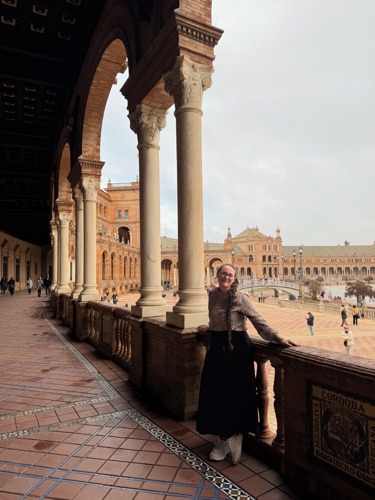
While at USI I have participated in the Criminal Justice book club, the Criminal Justice Student Association, the German Club, French Club, Spanish Club, Alpha Mu Gamma (honors language club), Study Abroad Ambassadors and the USI Student Alumni Association. Since I started at USI, I have been blessed with the opportunity to study abroad twice. Both times I went to Granada, Spain. The first time I went for a month in the summer. The second time I went for a Fall Semester. I had such a great experience each time! I learned so much about Spanish culture and customs, and I was able to experience the country (and varying parts of it) in different ways! I was able to enjoy the sunshine, ice cream, beaches and endless summer nights in July,yet also experience the changing of the leaves, sweater weather, snowy mountains and Christmas markets during the fall! It was such an eye-opening and exciting experience that I would highly recommend to anyone!
What are your plans after graduation?
I am planning on teaching after I graduate, perhaps at home, or abroad. I am currently looking at teaching in the US for a few years and perhaps teaching abroad for a few after that. However, if all else fails, policing is still high on my list of possibilities!
What advice would you give to current or prospective USI students?
My advice would be to try new things! But do so responsibly! You will never know what something is like until you try it. But don't do anything that could endanger you or others! As an example, if you are in Paris, alone, at night, and you are at least a mile away from your hotel, get a taxi! Riding in the taxi in Paris can considered be a new experience, and it is much safer than walking through dark streets and that one city park that gives you the heebie-jeebies. Maybe this is a made-up scenario up, maybe I am speaking from experience.
What is a fun fact about yourself?
My fun fact is that I can play the song "The Greatest Show" from the movie The Greatest Showman with my clarinet by memory.
7 p.m. Thursday, October 29 through Saturday, October 31
2 p.m. on Sunday, November 1
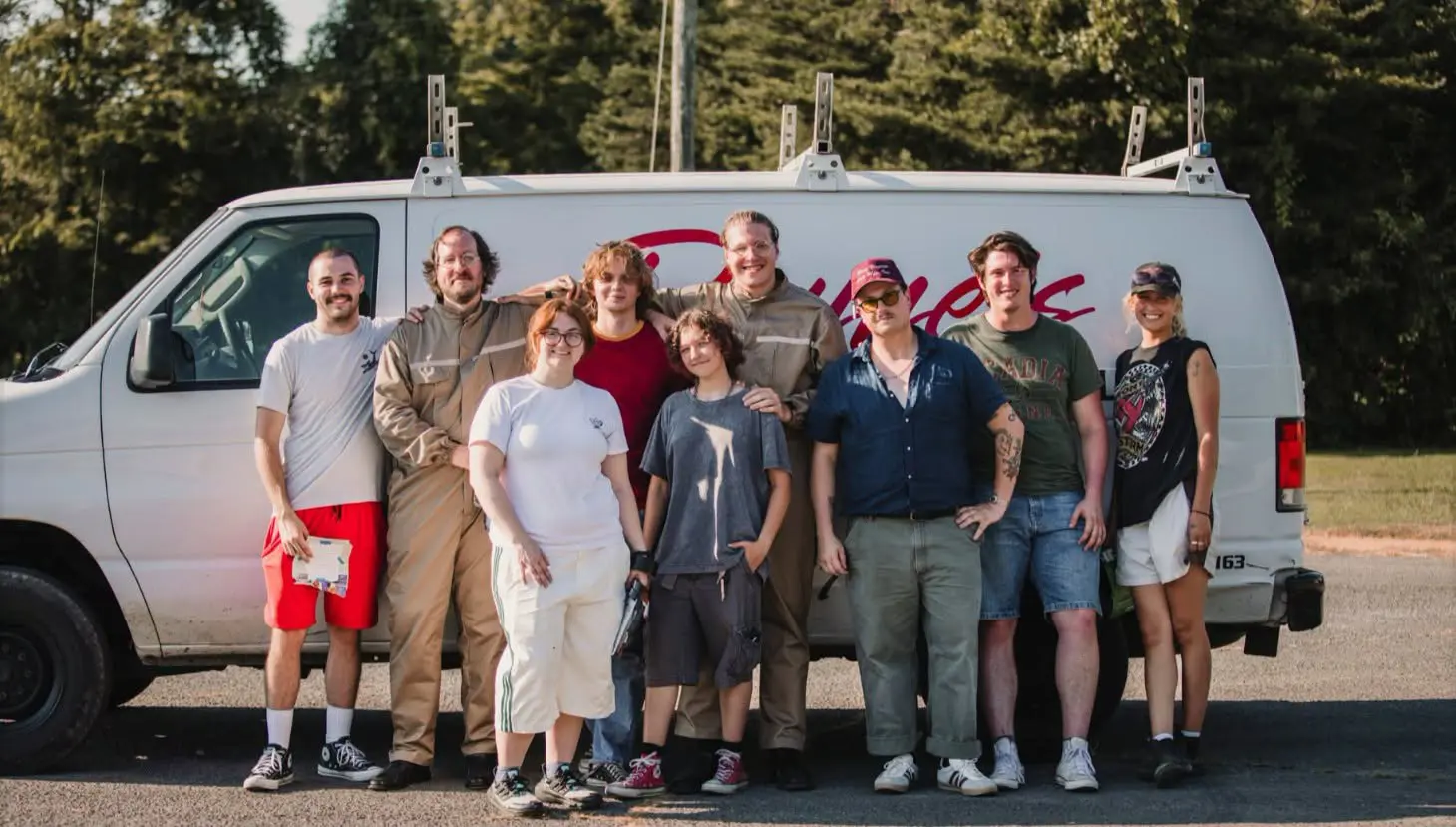
The Old Man has kept his post as the sole caretaker of the moon for as long as he (or his wife, the Old Woman) can remember. When she is drawn away by a mysterious melody that sparks memories of their shared past, the Old Man must decide between duty (and routine) and love (and adventure). Luckily for audiences everywhere, he chooses the latter, and what follows is an imaginative sea-faring epic, encompassing apocalyptic storms, civil wars, leviathans of the deep, cantankerous ghosts and the fiercest obstacle of all: change.
Thursday, December 3 - Sunday, December 6
The University's most enduring musical tradition, the Madrigal Feaste showcases members of the USI Chamber Choir, who don period costumes and entertain with selections of old English and Irish Madrigals, folk songs and holiday choral selections.
A reenactment of a 15th-century royal feast, the entertainment also includes dancing and merriment on a grand scale. A collaborative effort, the Madrigal Feaste partners talented faculty and students with University Dining Services to choreograph an evening fit for a king.
Dr. Trent Engbers, Professor of Political Science and Public Administration, received the Faculty Community Engaged Teaching Award from the Center for Rural Engagement.
Engbers was also selected as a Community-Engaged Alliance (CEA) Faculty Fellow. The Community-Engaged Alliance (CEA) Faculty Fellows program is a year-long Idea Lab initiative for Indiana faculty focused on enhancing civic-mindedness and community engagement among college students.
Dr. Kristin LaFollette, Associate Professor of English, was interviewed by the New Books Network podcast about her book Rehumanizing People of the Past: Bioarchaeology, Medical Museums and Archives, and the Human Remains Trade (SUNY Press, 2026). https://newbooksnetwork.com/rehumanizing-people-of-the-past
She was also interviewed by the Talking About Blood podcast about why the humanities matter in medicine. https://www.thebloodproject.com/why-the-humanities-matter-in-medicine-tab-43/
She was also interviewed by ABC 25 Local Lifestyles about her forthcoming books, Rehumanizing People of the Past (SUNY Press, 2026) and Intern Year (Harbor Editions, 2026). https://www.tristatehomepage.com/lifestyles/usi-professors-new-books/
Her book Rehumanizing People of the Past (SUNY Press) was published on September 1, 2026. https://sunypress.edu/Books/R/Rehumanizing-People-of-the-Past
Dr. Thir Budhathoki, Assistant Professor of English, has published a research article,"Literacies and Reflective Rhetorical Moves in the Literacy Narrative Assignment," in the Composition Studies journal. As the oldest independent periodical in the field of rhetoric and composition, Composition Studies is a flagship publication that has long shaped the scholarly conversations surrounding the theory and practice of college composition. https://compstudiesjournal.com/spring-2026-54-1/
Rob Dickes, Associate Professor of Photography and Digital Imaging, will give a lecture at Ohio State University on Saturday, October 17 entitled, "Is Photography Dead Yet," at the Society for Photographic Education conference.
Dr. Todd Schroer, Chair of Criminal Justice, was accepted and attended a teaching seminar at the National WWII History Museum. The seminar was a very deep dive into WWII with a focus on the Homefront. Analysis of each topic was led by experts in their fields. https://www.nationalww2museum.org/war/jenny-craig-institute-study-war-and-democracy/faculty-seminar-wwii-history#about
Dr. Greg Blair, Associate Professor of Art and Design, served as a portfolio reviewer for design students at Eastern Kentucky University on Thursday, September 1 and Saturday, September 3.
Dr. Melissa Stacer, Professor of Criminal Justice Studies, published a journal article titled “Still a soldier: Navigating military identity during incarceration” over the summer. https://journals.sagepub.com/doi/full/10.1177/14624745261473739
Virginia Poston, Instructor in Art History, presented a paper entitled, "Eloise Harriet Stannard’s Subliminally Sensuous Art: A Quiet Revolution in Victorian Still Life Painting," at the biennial conference of the International Nineteenth-Century Studies Association held from July 21-24, 2026, in Washington, D.C. Funds from the USI Foundation helped make this trip possible.
Hang Yuan, Assistant Professor of Art and Design, and Roger Gude, Instructor in Professional Studies, have published new creative, theoretical work, Character.exe: Exploring Agency Through Narrative Choices, at the International Conference on Human-Computer Interaction (HCII).
The project tackles a gap many educators recognize: students face complex decisions throughout their academic lives but rarely get structured opportunities to reflect on how they reason through them. Character.exe addresses this through an interactive narrative prototype that places students in a mystery scenario, tracking their choices across five decision points touching on agency, ethics, trust and collaboration. https://link.springer.com/chapter/10.1007/978-3-032-30816-0_39
Dr. Steven Casement, Assistant Professor of History, was awarded a 2026 Indiana Academy of Social Sciences (IASS) Faculty Research award for his upcoming contribution to a new edited volume. The chapter is entitled, “Converging Diplomacy, Religion, and Trade: The Anglo-Ottoman Connection, 1660-1669,” and will be presented at the 2027 annual meeting of the IASS next October.
Dr. Amy Montz, Professor of English, will give a talk on October 21 for the Bronte Parsonage and the Gaskell House in Manchester, England. https://elizabethgaskellhouse.co.uk/events/online-event-elizabeth-gaskell-v-anne-bronte-monsters-and-madmen/
OCTOBER:
October 1: Faculty Colloquium with Dr. Taylor Petty
October 9: Anthropology Speaker Series with Dr. Mike Strezewski
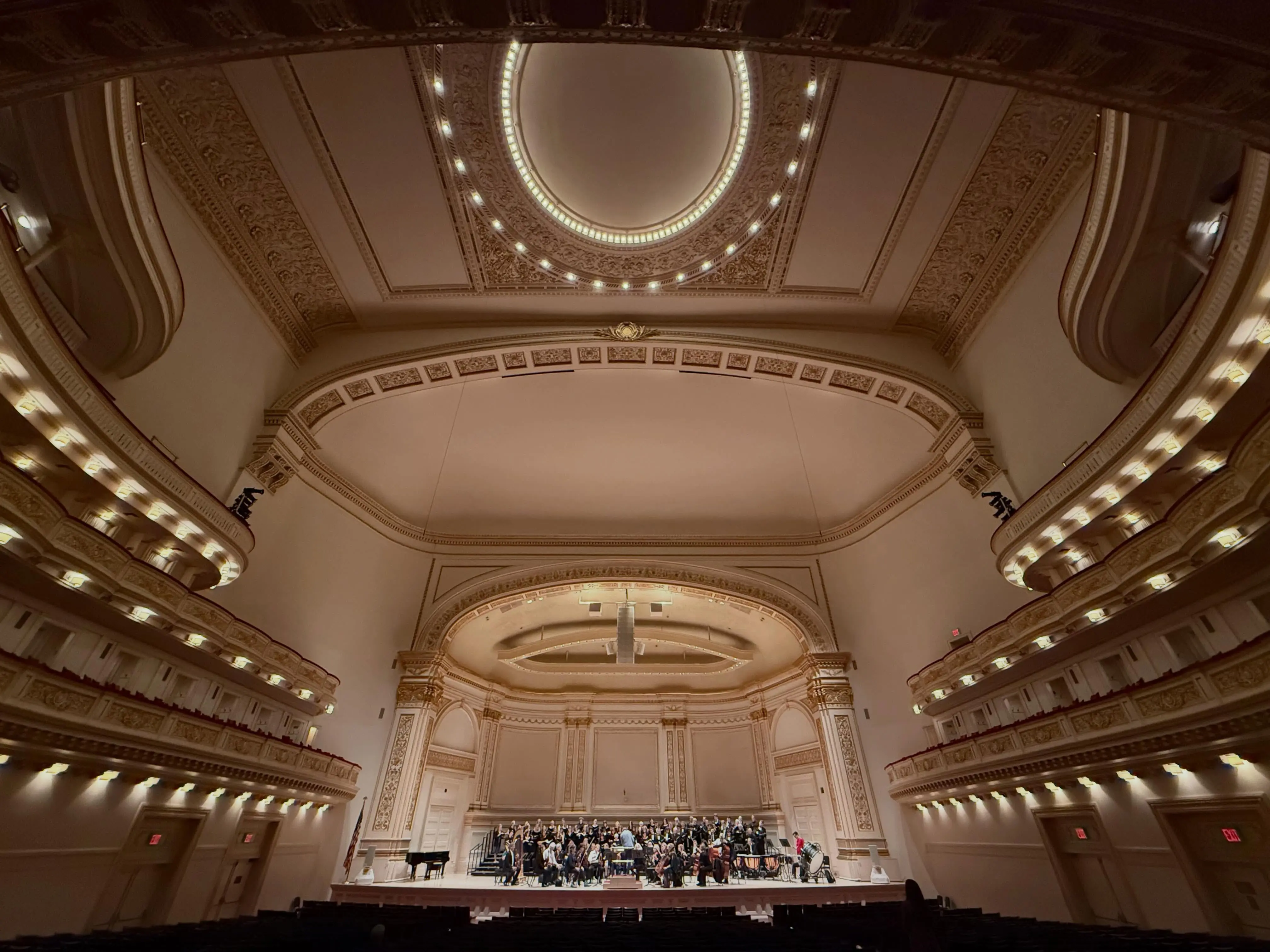
October 25: Chamber Choir Fall Concert
October 28: Artist Talk
October 29 – November 1: The Old Man and the Old Moon
NOVEMBER:
November 5: Red, White, and River City
November 6: 4th Undergraduate Psychology Research Conference
November 11: Juried Art Exhibition
November 12: Innovative Communities: Past, Present, and Future Conference
November 13: Faculty Colloquium with Dr. Amy Montz
November 15: Reception and Awards: Juried Art Show
November 15: USI Jazz Ensemble at Bokeh Lounge
DECEMBER:
December 3-6: Madrigal Feaste (tickets go on sale October 1)
December 6: USI Jazz Ensemble final concert