


“I learned that courage was not the absence of fear, but the triumph over it” – Nelson Mandela
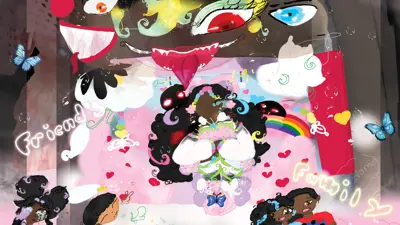
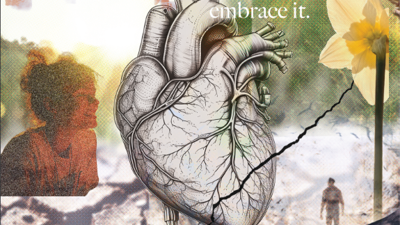
Fear is an essential part of the human experience. Linked to our earliest human ancestors as a survival instinct, its power is unquestionable. While we have evolved to interpret and act upon fear, it remains a constant in our lives. Although fear stimulates an uncanny awareness of danger and discomfort, it can also catalyze change. As we grapple with life’s uncertainties, fear fosters moments of growth, motivation, and introspection. This year’s colloquium examines our complex ability to both overcome and embrace fear, for it is often in these vulnerable moments where we are the most afraid that we feel the most alive.
Virtual Submissions on Display (Ongoing): Please visit our website to view an online exhibition of artwork from the following participants:
Artwork and Posters on Display in Carter Hall: We invite you to peruse the following posters and artwork on display in Carter Hall. Please stop by during lunch from 12:00-1:00 for an opportunity to chat with artists and poster presenters about their work!
Students of ANTH 322: Cultural Ecology, “Fear and Cultural Ecology:” posters exploring themes related to humanity and the environment.
Featuring posters from Liam Bohler, Alexander Kochersperger, Bethany Kuhs, Liam League, Stephanie Raymond, Jake Sands, Casey Schneider, Caitlyn Selby, Moss Shofstall, Laney Smith, William Smith, Kaitlyn Sullivan, and Jeannie Wedding. Professor: Daniel Bauer (World Languages and Cultures)
Students and Faculty of Painting I-IV, “Visualizing Fear.”
Featuring artwork from Shelby Altman, Caysie Armstrong, RoxAnne Bryant, Abbie Buttry, Marissa Cain, Jennifer Chittenden, Sara Christensen Blair, Lydia Deckard, Faith Guzman, Alyssa Harlow, Daniel Heeke, Judah Henson, Sincere Howard, Ally Hughey, Marla Kercher, Samantha Lawrence, Kennedy Lockyear, Anna Markland, Alana Osenbaugh, Hannah Rasche, Lisa Ryan-Hutton, Delaney Smith, Aryiana Swope, and Luke Venters. Professor: Sara Christensen Blair (Art and Design)
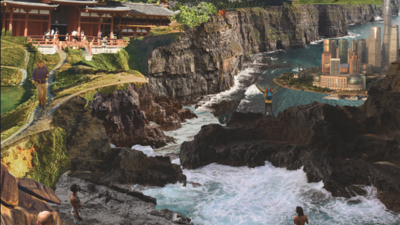
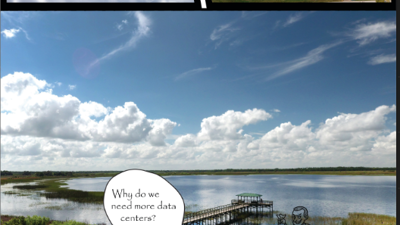
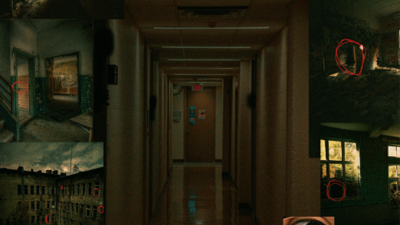
Students of Introduction to Digital Media, “Fear: A Photo Collage.”
Featuring artwork from Alec Knies, Sam Neukam, Amirah Norman, Braxton Stevens, Sarah Toy, Andrea Villasenor, and Zoey Wilson. Professor: Sophia Okotah (Art and Design)
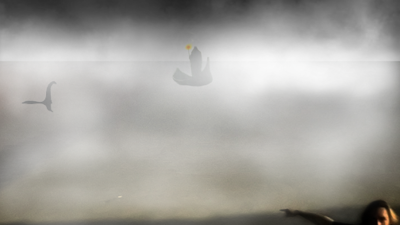
Students and Faculty of Lithography and Screen Printing; Students of Printmaking Methods, “Superstitions & Urban Legends.”
Featuring artwork from Brett Anderson, Abigail Bigge, Roxanne Bryant, Morgan Ellis, Ava Harmon, Kayli McDonald, Katherine Medina-Martinez, Lorynn Paris, Sophia Queener, Ethan Reherman, Delaney Smith, Addison Sumner, Cassadie Thom, Jocelyn VanMatre, and Kassie ZurSchmeide. Professor: Brett Anderson (Art and Design)
8:00-8:30 Breakfast and Opening Remarks
8:30-8:55: “Fear - She's the Mother of Violence”: A Cultural Approach to Developing a Critical Media Perspective on Fear,” a roundtable discussion with students of COMM 192: Introduction to Mass Communication. Chair: Peter Whiting (Library)
Panelists: Davon Carter, Jane Howder, Matthew Kolb, Colin Milsap, Madelyn Moore, RJ Ramsey, and Brayten Reinhart. Professor: Philip A.S. Todd (Communication and Media).
9:00-10:20 Panel I: Embodying Fear. Chair: Jean Zelenko (Social Work)
Panelists: Deeksha Aradhya (Education); Britney Gentry-Orth (Dean of Students Office); Samatha Jones (Warrick Country School Corporation); Jill Raisor (Education); and Moriah Smothers (Education).
10:30-11:45 Panel II: Manufacturing Fear: Power, Punishment, and Aesthetics. Chair: Stella Ress (History)
Panelists: Ezekiel Barnes, Addison Doane, Jack Hannon, Autumn Meyer, and Skylar Ritchie. Professor: Todd Schroer (Criminal Justice)
11:45 Announcement of the USI Center for Social Justice Education’s Excellence in Research Award
12:00-1:00 Gallery and Poster Walk
*A buffet lunch will be served. We invite you to bring your lunch to Carter Hall to chat with artists and poster presenters about their work!*
1:00-1:30. “First Drafts, Fourth Estate, Free Press and Fearmongering: Today’s Journalists Navigate Fake News, Followers, Bots and Other New Media Challenges,” a round table discussion with students of JORN 381, Journalism and Storytelling. Chair: Andrew Buck (Sociology)
Panelists: Amber Adams, Jo Douglas, Sam Taghoy, Elayna Wiggins, and Zoey Wilson. Professor: Philip A.S. Todd.
1:30-2:45 Panel III: Governing Fear. Chair: Silvia Rode (World Languages and Cultures)
Panelists: Jason Callahan, Bryan Moore, Taylor Petty, Todd Schroer, Jennifer Dennis Schaefer, and Melissa Stacer, faculty in the Department of Criminal Justice
2:45-3:05 Coffee and Pastry Break
3:05-4:20 Panel IV: Performing Fear: Stage Fright. Chair: McManus Woodend (Communication and Media)
4:30-5:30 Panel V: Conquering Fear. Chair: Keene Short (English)
Amy Elsner
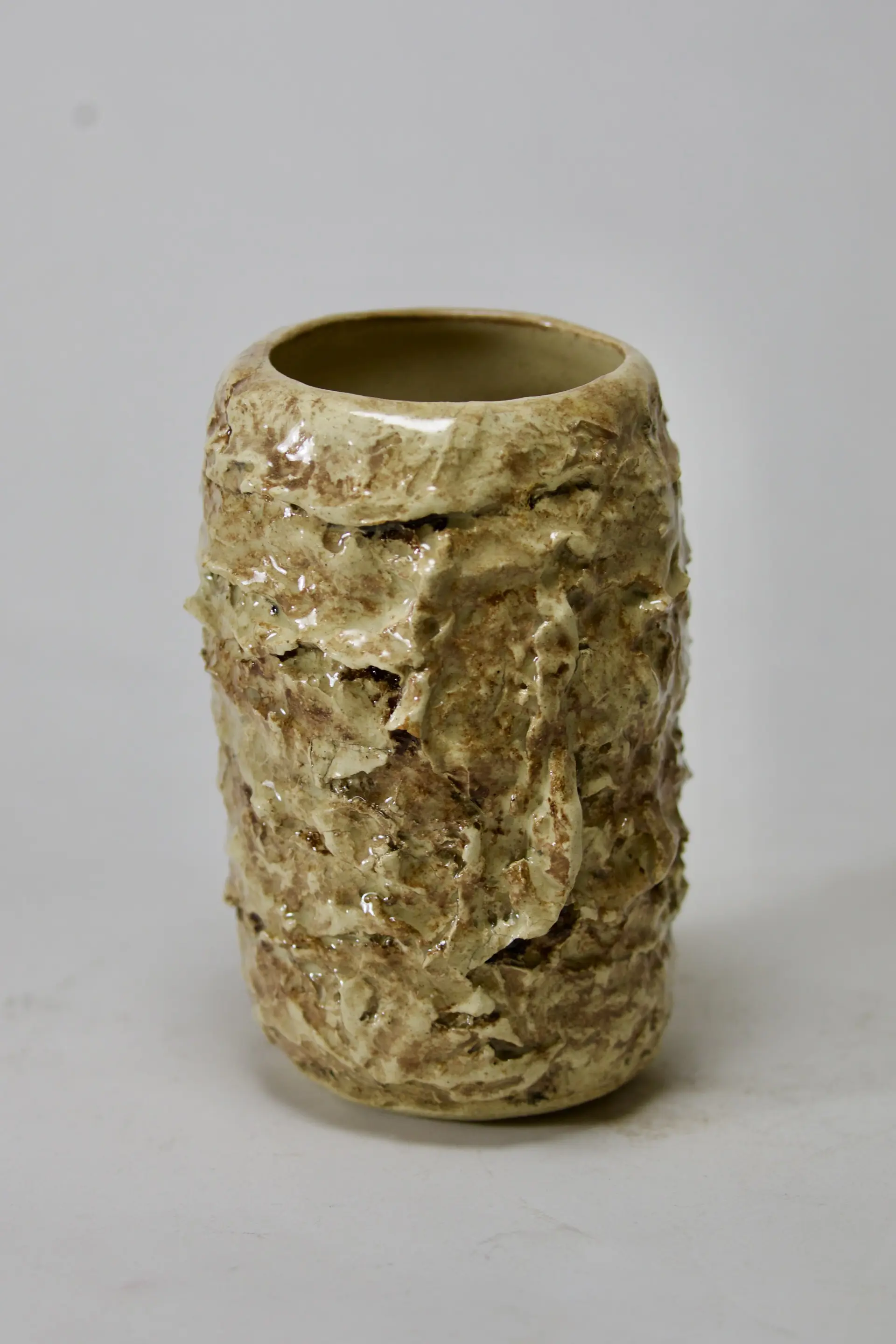
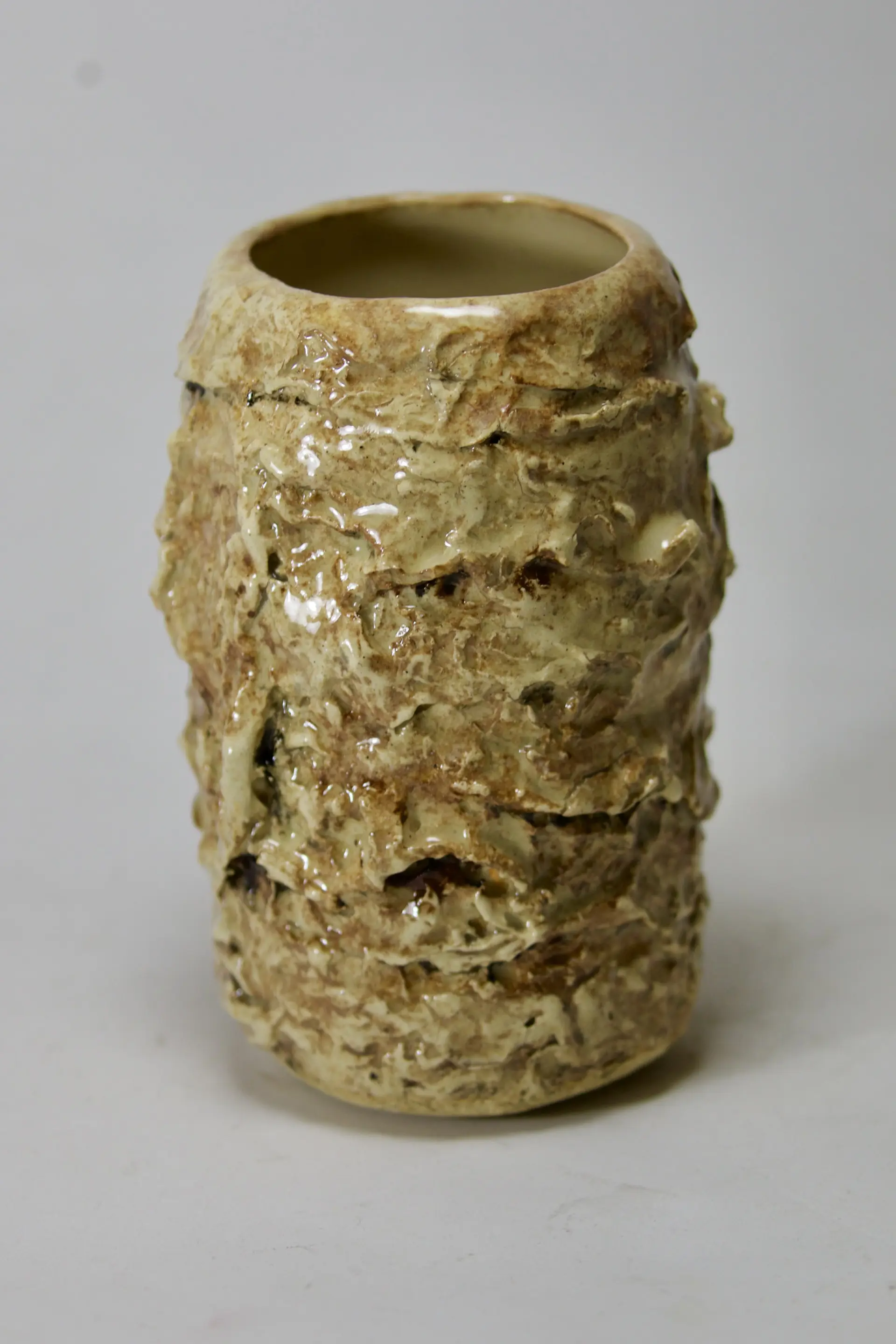
Hornets’ Nest Vase
The piece was created Spring, 2026
Ceramic
Artist Statement
Nature is my source of inspiration. I am drawn to natural forms that show beauty and warning. The hornets’ nest became a piece that I wanted to create because it represents a powerful balance between harmony and dissonance. From a distance, the nest has a beautiful, layered pattern. At the same time, it signals danger and causes an instinctive sense of caution.
In creating this vase, I focused on building up the surface with repeated layers and textures that mimic the structure of the nest. My process involved shaping the clay into a cylinder. Then I shaped and altered the clay to form an uneven surface. I then built layers of the nest by adding ripped paper towel strips that were dipped in a bonding adhesive for clay. The paper towel strips become a part of the clay. The physical process of working the clay and adding layers of clay allowed the form to develop organically. After the bisque firing or first firing, I painted the vase with a sponge so that the texture and color would resemble a
hornets’ nest. I added a clear glaze before the final firing to make it a ceramic art piece.
My ceramic Hornets’ Nest Vase explores the way humans instinctively respond to visual signs of danger. A hornets’ nest is a natural structure that most people recognize immediately as a warning. Its layered, swirling surface suggests that something is potentially threatening and alive inside. Even without seeing the hornets, the form of the nest triggers a sense of unease. Humans are highly responsive to visual cues that signal risks. The shape and texture of the hornets’ nest communicate danger before any physical threat appears. When viewers encounter this vase, they often react emotionally. This reaction is before they begin to analyze it as an object of art.
Reactions to my piece come from the brain’s instinctive “fight or flight” response. When humans perceive a potential threat, the brain quickly prepares the body either to escape or defend itself. The hornets’ nest acts as a visual signal that activates this instinct. In this way, my ceramic vase functions like a warning sign.
By translating the form of a hornets’ nest into ceramic, I wanted to explore how this simple natural structure can trigger strong psychological responses. My hope is that viewers pause for a moment and recognize how deeply our instincts shape the way we see danger, even when it is made of clay.