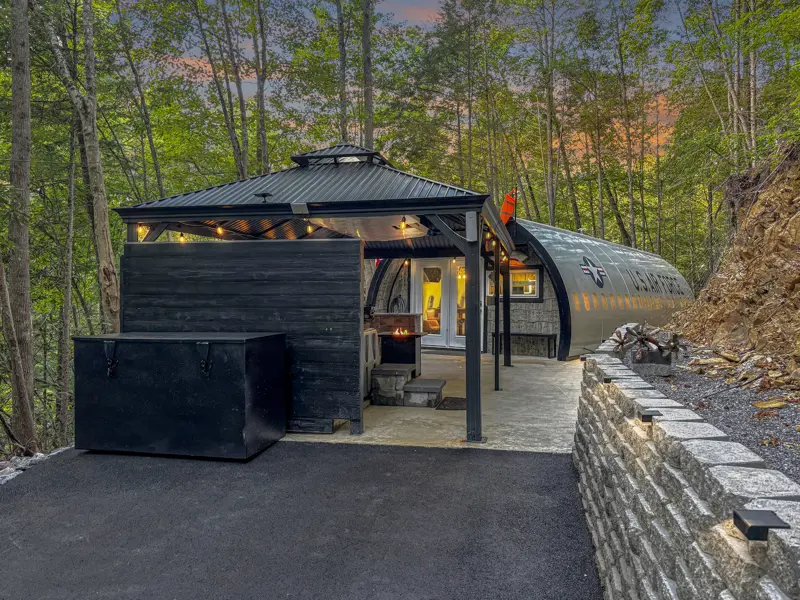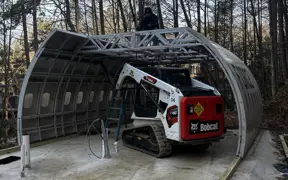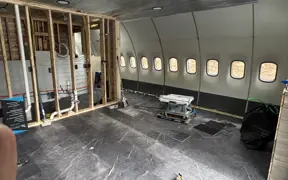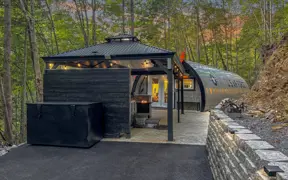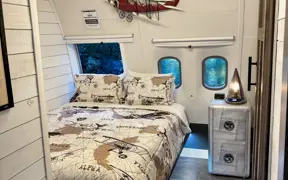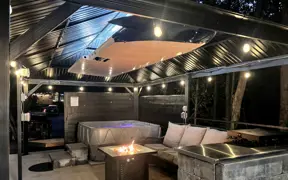
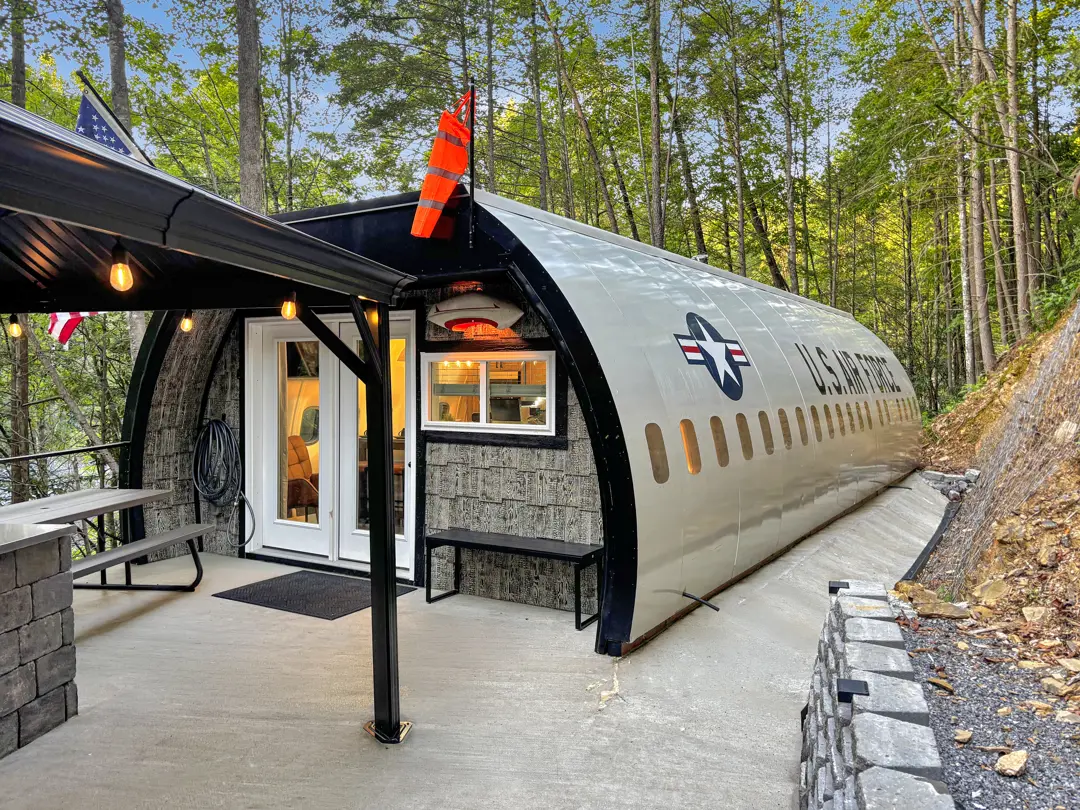
Pilot. Contractor. Entrepreneur. CEO. Real estate investor. Airbnb owner. Business Administration major at USI. All hats that senior Austin Knepp wears. He recently finished building Airborne Escape, an Airbnb in Gatlinburg, Tennessee, but it’s far from your typical rental cabin in the Smokies. Being an aviation enthusiast, his vision was to build a home constructed from pieces of an actual airplane fuselage.
“I would watch videos of converted airplanes on YouTube and always thought it would be incredible to own one someday. I just never expected the opportunity to come as early as it did. I had already started investing in real estate. I bought my first property at age 16 and completely renovated it, later built a 60-unit self-storage facility, and then built my first short-term rental cabin in Gatlinburg on a lot where the previous house had burned down. I owned the vacant lot beside that cabin and planned to eventually build something else there, but I thought that would be years down the road.”
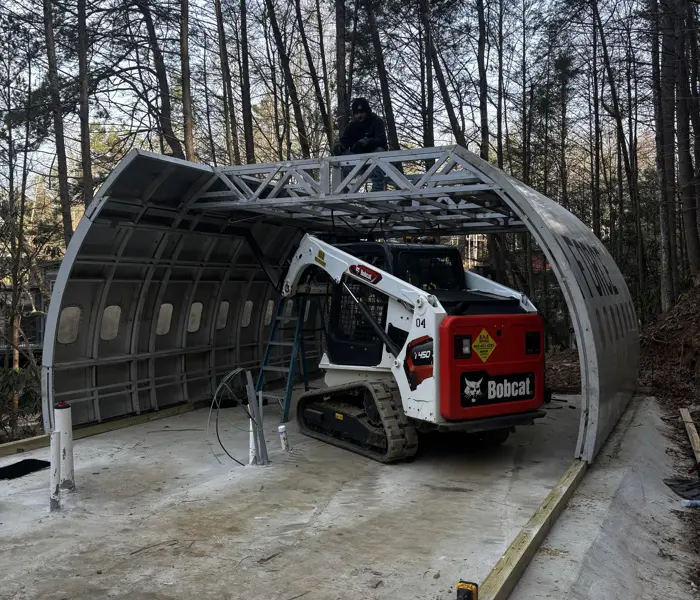
Austin found the airplane fuselage in Henderson, Kentucky, through Facebook Marketplace. The plane’s history makes it even more interesting. “The fuselage is tied to the U.S. Air Force's canceled E-10/MC2A program, which was based on the Boeing 767-400ER. This particular airframe section passed through several owners. At one point, a former military owner hoped to use it as part of a children's aviation exhibit and had collected other aviation pieces for it, but that project never happened. It ended up sitting for years before eventually being sold at auction and making its way to Henderson.
“Once I saw it, there was no going back,” says Austin. “I put down a deposit and figured out the rest afterward. It was not in my budget at the time, but I knew opportunities like that do not come around very often. I believed there was a real business case for it. Gatlinburg has thousands of cabins, so I knew I could not compete by building another normal cabin.”
A Design Takes Flight
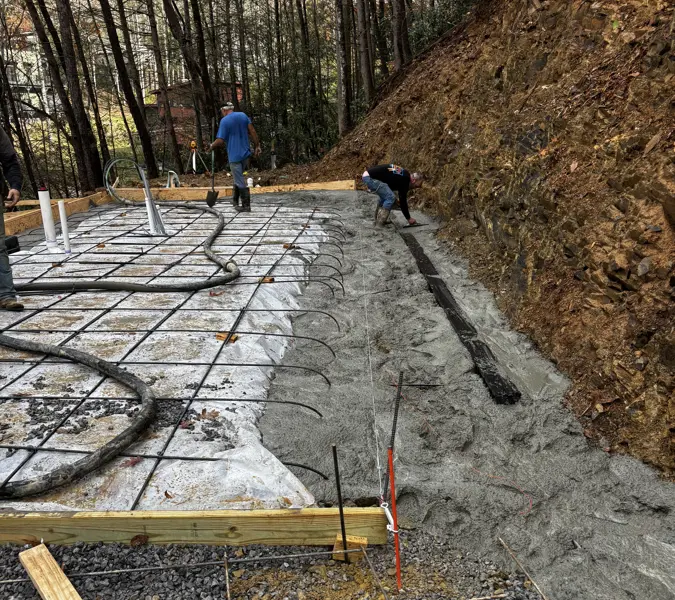
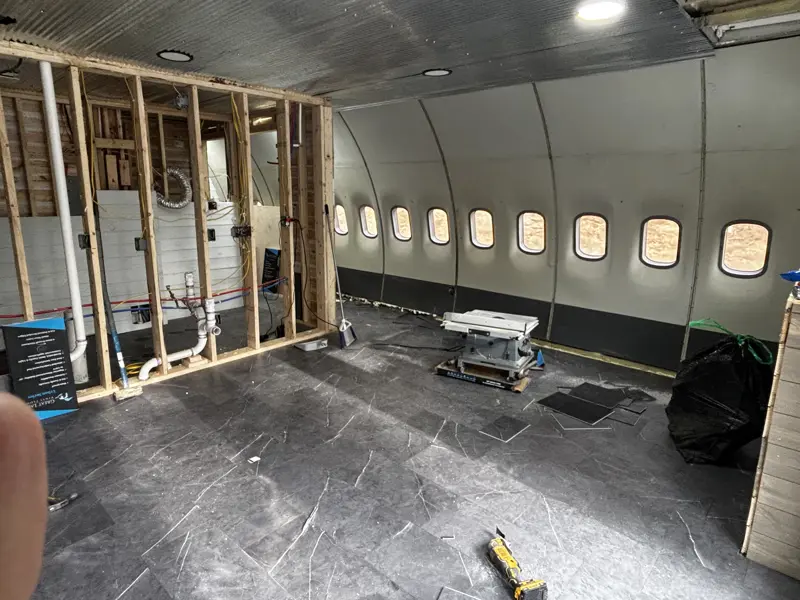
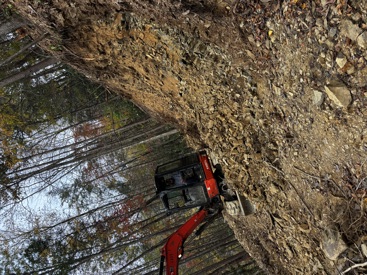 Austin built most of the property himself, with the help of relatives and friends. “During the school year, I would go to class at USI during the week, leave for Gatlinburg on Thursday, work all weekend, and drive back Sunday night. It’s about a 6 ½ hour drive each way, and I did that for almost a year, including spending most of my school breaks working on it.”
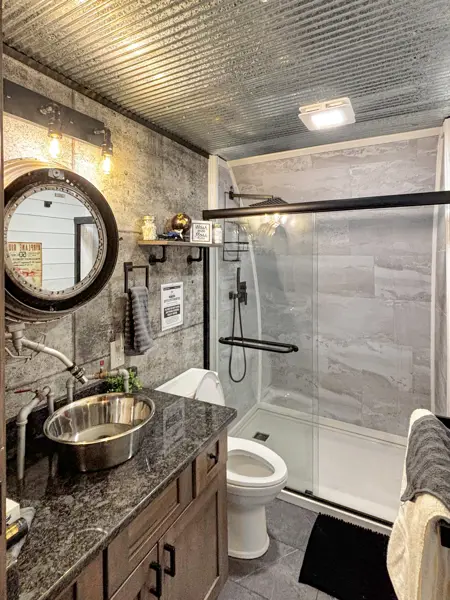
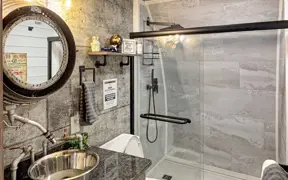
Austin’s design ideas evolved as the property was being developed. “I slowly started collecting airplane parts anywhere I could find them. I would go through aviation salvage yards and look at something without necessarily knowing what I was going to do with it. Eventually I would find the perfect place for it. There are around 20 different aircraft parts incorporated throughout the finished property. I used aircraft components in the bathroom, including part of a jet engine around the mirror and an aviation fuel-nozzle feature. I even took mufflers from my own airplane and repurposed them to create custom lighting. I am proud of the unique aircraft pieces because almost each one has a story. I took airplane parts that most people would probably consider scrap and figured out how to turn them into lights, furniture, mirrors or decorations.”
The reaction to seeing Airborne Express? “Usually, people’s jaws drop,” says Austin.
Turbulence Along the Way
Building Airborne Escape wasn’t without challenges and setbacks. “By far the biggest challenges were the regulations and permitting. I had to obtain my Tennessee contractor license to be able to handle the project the way I wanted to. It was frustrating at times because I was doing something the city had never dealt with before, so there was not always an obvious answer. There isn’t exactly a standard checklist at City Hall for turning part of a Boeing 767 into a house on the side of a mountain.
“Because the property is within Gatlinburg city limits, I had to work through building requirements, planning and zoning, structural engineering, inspections, hillside-development requirements and short-term-rental requirements. The airplane had to be treated as a permanent structure, which meant putting it on a properly engineered foundation rather than simply setting an airplane on the property. I ended up dealing with engineers, an architect, surveyors, a licensed landscape architect, building inspectors, planning officials and multiple specialty contractors. There were landscaping and visual-screening requirements because of the hillside location.
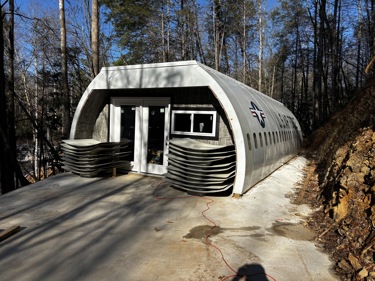 “The retaining wall was probably the biggest setback. The parking area is built into a steep hillside, so it requires a substantial retaining wall. I originally constructed a wood retaining wall that was around 9 feet high in places. By the time I got to the end of the project, the engineer would not sign off on what I had built. That was a painful moment because the interior of the airplane was basically finished. I had spent months getting everything else approved, and one of the last things standing between me and opening was something I thought had already been completed.
“I eventually had to redesign the wall using a much heavier engineered system. It cost more money and delayed the opening, but it taught me a lesson I will probably never forget: on unusual construction projects, especially on mountain property, get the engineering finalized before you build it. Something can look incredibly strong and still not meet what an engineer or building department needs to approve. I would rather spend the money on engineering at the beginning than pay twice to build something again at the end.
“Overall, the biggest thing I learned was to keep working through one problem at a time instead of looking at the entire list.”
From Blueprint to Boarding: Making the Numbers Fly
Once construction is completed, the focus shifts from building the property to building a long-term successful business. Austin said the areas of business with the greatest relevance to his venture so far have been finance and accounting. “The construction side gets the most attention because that is what people see, but the numbers are what determine whether a project can actually survive as a business. Before I build something, I am constantly estimating what it will cost, what I think it can rent for, what occupancy could look like, what the operating expenses will be, how long it will take to recover the investment and how much unexpected cost I can absorb.”
He said his Airborne Escape Airbnb is a perfect example “because it went considerably over the original budget. Between engineering, plans, permitting, redesigns and professional services, there were thousands of dollars in added expenses. You have to be able to separate being emotionally attached to an idea and determining whether spending another dollar still makes financial sense.”
First-Class Hospitality
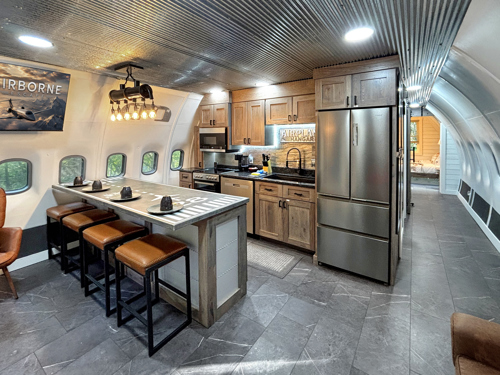 Many people who have shown an interest in staying at Airborne Escape have some kind of aviation or military connection. “With that in mind, I wanted it to appeal to pilots and aviation enthusiasts, but also veterans, military families and people who have some connection to aviation. At the same time, I wanted a kid who had never been in a small airplane before to think it was the coolest place they had ever stayed. My goal was for someone who knows absolutely nothing about airplanes to still love the property because of the location and amenities, while someone who really understands aviation could walk around and recognize all of the little details.
“It is intentionally priced higher than many rentals because I am not trying to compete for someone who is searching for the cheapest place to sleep. I want guests who see the property to say, 'I want to stay in that airplane.' That lets the property command a higher nightly rate, but it also tends to attract guests who really appreciate the details and the amount of work that went into creating the experience.”
People comment on how naturally everything flows together; it is not just an airplane dropped onto a lot. “The retaining walls, outdoor areas, lighting, landscaping and hillside all frame the airplane and make it feel like it belongs there. Pictures show the airplane, but I do not think they completely show how unusual it feels seeing a Boeing fuselage sitting in the trees on the side of a mountain in Gatlinburg. I wanted something people will remember and something that could become a destination itself. A great property gets someone to book once. A great experience is what gets the five-star review that convinces the next person to book. I never want guests to think, 'The airplane is cool, but that is the only reason to stay here.' The airplane gets their attention, but the property still needs to compete with high-end cabins once they arrive.
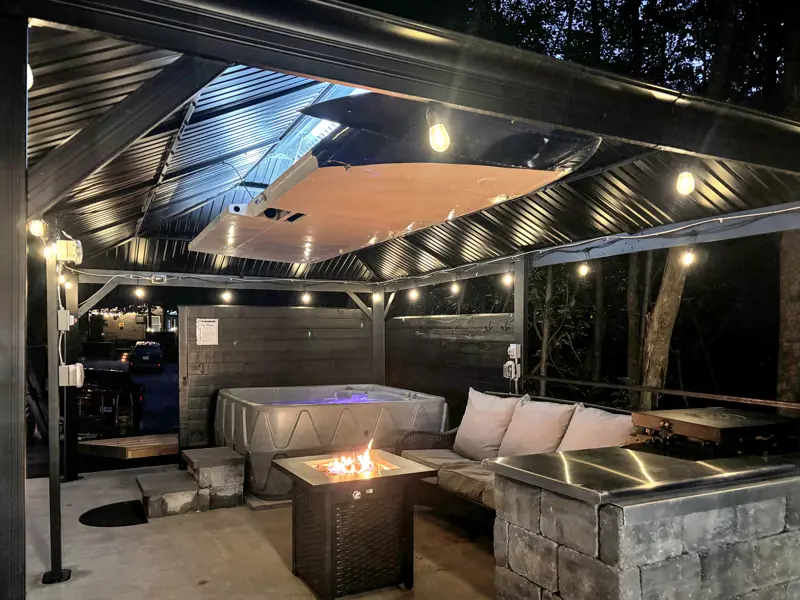
“I learned very quickly how important reviews and guest experience are. I already had about a year of experience operating my other Gatlinburg cabin before Airborne Escape opened, and I am thankful I did because there is much more to hospitality than putting a property online and collecting rent. You are essentially on call 24/7. If the hot tub stops working, the Internet goes down, a guest cannot figure out the door lock or something breaks at 10 at night, it becomes your responsibility. I have learned that the important thing is responding quickly, treating people well and fixing problems when they happen.”
Back Where It All Took Flight
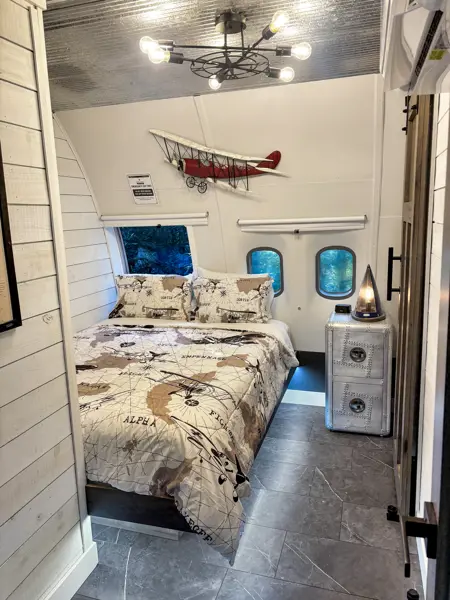
Seeing a dream finally come to fruition is rewarding. For Austin, one of the most rewarding things about Airborne Escape was having the previous owner of the airplane fuselage stay as one of the first guests. “He had owned this huge piece of an airplane without really knowing what its ultimate future would be. Years later, he got to walk into it and see bedrooms, a kitchen, a bathroom, aviation pieces, lighting, a hot tub and everything else built around it.
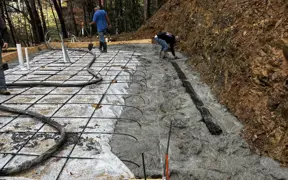
“That was a full-circle moment for me. For so long, I had been staring at unfinished framing, dirt, concrete and airplane pieces scattered everywhere. Having someone who knew what it looked like before actually spend the night in it made it feel like the project was finally real.”
An Entrepreneur at the Controls
Austin has had an entrepreneurial mindset from an early age, always thinking about how he could build something or turn an idea into a business. He saved money from his first job to buy tools, then started building children’s barrel trains when he saw the demand for them.
“That turned into Fun on the Run LLC. I developed a way to produce the trains efficiently, sold them primarily online, and eventually built and shipped around 200 of them across the country. That experience taught me a lot at a really young age about purchasing materials, pricing products, managing orders, shipping, dealing with customers and figuring things out when something went wrong.
“I founded Knepp's Country Customs in 2020, originally doing custom projects, woodworking and fabrication. From there, I slowly transitioned more into construction and real estate. I bought my first investment property, renovated and sold houses, built storage units, got into rentals and eventually started developing short-term rentals in Gatlinburg.
“Every business has been different, but each one taught me something that helped with the next one.”
The Sky’s the Limit
Austin says graduating from USI is his main goal, but there’s much more to conquer. “I want to continue growing what I already own, keep investing in real estate and eventually find the next project that is different enough to get me excited about building something again. I am always looking for the next venture.”