


God of Decay
by Hadara Bar-Nadav
Grubs and Japanese beetles
turn the whole green
world to lace.
The garden displays
our neon failures:
leafless, littered.
But the giant sunflowers wildly
refuse their erasure—
nodding, black-
eyed, rotting
smiles inside halos
of flaming hair.
Glazed over, high
above my head, looking
down at me or not
looking at all.
Bouquet of strange
shadows.
I am the dirt-
pink earthworm,
and you, the golden
many-headed god.
Decay carries
the sky above
our small crawling.
“God of Decay” was initially inspired by the magnificent sunflowers in my neighborhood in Kansas City. I have never seen such massive sunflowers—twelve feet tall with stems as thick as a child’s wrist. These sunflowers seem other-worldly and superhuman, sky-scraping sunflowers that cast a shadow down on me. I feel humble and small in their golden presence.
As the sunflowers die, however, they become something else—lanky and elegant skeletons that hold up the sky. They are no less magnificent, though they lose their petals and gray over, as if they finally absorb their own shadows. I think of C.D. Wright’s urgent claim: “I will uncover a use for the ashes.” Here are the sunflowers, once gold, now infused by a wild, kinetic darkness all their own.
My discovery when writing this poem was embracing decay and grief in the form of sunflowers while simultaneously recalling beloved friends whom I have lost to addiction. I assigned or, more accurately, the poem assigned these sunflowers to dear friends: high and gorgeous and mythical. In the end, this poem is an elegy, which resists the closure of death. Allen Grossman assures us that the very function of poetry “is the keeping of the image of persons as precious in the world.” Poetry keeps my beloved friends alive, or perhaps keeps them present, as do the sunflowers, which of course will die and bloom again.
Death isn’t final for those who are left behind. And I suspect death isn’t final for those who die either. Energy transfers, becomes something else, part of the great wind that whips the petals and seeds. And so I give my dear friends these sunflowers and bow beneath them, insisting on loving and honoring them long after they have gone.
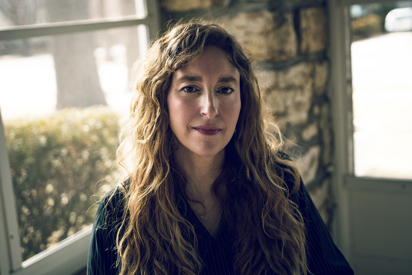 Hadara Bar-Nadav is the author of five books of poetry, most recently The Animal Is Chemical, selected by Jericho Brown for the Levis Prize in Poetry. Her other books are The New Nudity; Lullaby (with Exit Sign), awarded the Saturnalia Books Poetry Prize; The Frame Called Ruin; and A Glass of Milk to Kiss Goodnight, awarded the Margie Book Prize. Her poetry has appeared in The American Poetry Review, The Believer, The Kenyon Review, and Ploughshares. A current reader for POETRY, Bar-Nadav is a professor of English and teaches in the MFA program at the University of Missouri-Kansas City.