


It’s a Question of Taste
by Thea Matthews
In conversation with JoeSam.’s Emergency / “Bloody Sunday.”
Nina,
aim your fire,
hurl 9 bullets back,
it’s an emergency,
lie down in a field
of begonias, play
beneath Jupiter
from your belly
full of rage. I, too,
have flames swirling
inside my throat,
burning my gullet.
I wish I could knock
the dirt off my boots,
but I prefer another
beating than hammer
down a hesitation
of hot steel. We
are moved by the sway
of an axe drenched
in Sunday’s blood
from Birmingham to Selma.
In the night,
a wooden cross is not yet lit,
a white hand guilty
of murder, a white
cotton cloaks
the brokenhearted,
you see, their Blackness
is not the terror.
They stand aghast.
God is watching.
Tear gas reverses
the flag. Some prefer
the stars upside down.
There is a hole in one heart,
roses bloom in another.
Black targets
under the age of ten
wear funeral wreath flowers
like crowns and tiaras,
but if they live,
they are numbered,
like 9674, caged,
far away from rows of 42-inch-waist patriarchs.
Ask me a question
on the Ouija board,
“YES” is circled in sky blue,
with floating letters:
S for slavery, C for color,
Y for yearning…
The monopoly of
as above so below
trembles hands.
The palms, poise,
of this country, chokes
unborn children. Women
carry the bodies.
The Confederacy
dresses you up in Sunday
best. A red heel hides
in church. We are taught
to pray hard, play dumb,
be servile as we pour
Uncle Remus Syrup.
Uncle Tom the martyr
is sacrificed. To live,
we give our fingerprints
on the plantation.
To die, we hunt
ourselves to
no end.
.
The reader becomes Nina.
On Sunday, September 15, 1963, domestic terrorism occurred. The 16th Street Baptist Church in Birmingham, Alabama was bombed by the KKK, killing four African American girls. Nearly two years later, another instance of domestic terrorism—on Sunday, March 7, 1965, approximately 600 peaceful Civil Rights activists were violently attacked by state troopers and local police while marching from Selma to Montgomery, Alabama. The state brutality at the Edmund Pettus Bridge was televised, which helped to galvanize support for the Civil Rights Movement. The distinction between agitation and protest is paramount for the galvanized support; and these Bloody Sundays of the Civil Rights Movement spurred some of Nina Simone’s most iconic protest songs, particularly “Mississippi Goddam,” as she processed and battled the hate.
When I served as a Poet-in-Residence for the Museum of the African Diaspora in San Francisco in 2023, I came across the incredible work of the late African American mixed-media artist, JoeSam. His layered collage work culminates meditative explorations of social justice, identity, the African American experience, history, as well as the systemic racism and injustice unending within the U.S. “It’s a Question of Taste” is part of a series of ekphrastic poems in conversation with JoeSam.’s work, and this poem converses with his activating Emergency / “Bloody Sunday”—his response to history before, during, and after the Civil Rights Movement, Nina, and the Bloody Sundays. My poem interweaves the text he uses on his canvas, the imagery he constructed, and the colors he emphasized to underscore the magnitude of systemic violence and emergence of a hunting season as a veil for the pursuit of justice.
.
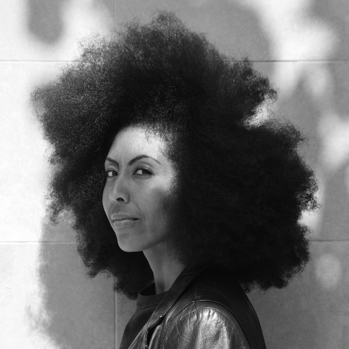 Thea Matthews is the author of GRIME (City Lights Books, 2025) and Unearth [The Flowers] (Red Light Lit Press, 2020), which was named one of Kirkus Reviews’ Best Indie Poetry Books of 2020. Her writing has appeared in The Atlantic, ZYZZYVA, The Cortland Review, Colorado Review, The Common, Obsidian: Literature & Arts in the African Diaspora, The Massachusetts Review, The New Republic, and On the Seawall, among others. She attained her MFA from New York University, and currently teaches at Columbia University. Originally from San Francisco, Matthews lives in Brooklyn, New York.