Looking for your next great read?
HACH faculty have curated this list of books they recommend for students interested in health administration and community health. These titles go beyond the classroom to explore leadership, health systems, equity, policy, and personal growth, helping you build perspective as a future health professional.
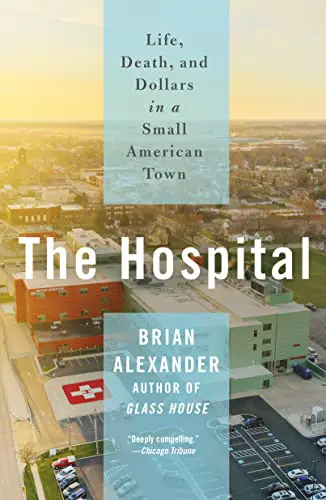
The Hospital
Brian Alexander
By following the struggle for survival of one small-town hospital, and the patients who walk, or are carried, through its doors, The Hospital takes readers into the world of the American medical industry in a way no book has done before. Americans are dying sooner, and living in poorer health. Alexander argues that no plan will solve America's health crisis until the deeper causes of that crisis are addressed.
Bryan, Ohio's hospital, is losing money, making it vulnerable to big health systems seeking domination and Phil Ennen, CEO, has been fighting to preserve its independence. Meanwhile, Bryan, a town of 8,500 people in Ohio's northwest corner, is still trying to recover from the Great Recession. As local leaders struggle to address the town's problems, and the hospital fights for its life amid a rapidly consolidating medical and hospital industry, a 39-year-old diabetic literally fights for his limbs, and a 55-year-old contractor lies dying in the emergency room. With these and other stories, Alexander strips away the wonkiness of policy to reveal Americans' struggle for health against a powerful system that's stacked against them, but yet so fragile it blows apart when the pandemic hits. Culminating with COVID-19, this book offers a blueprint for how we created the crisis we're in.
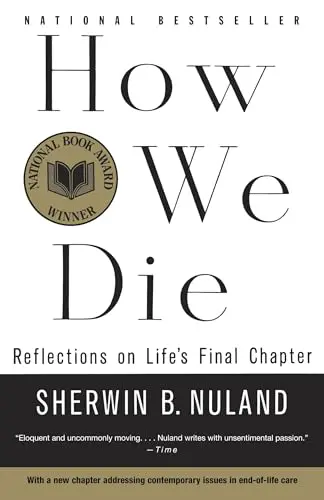
How We Die
Sherwin Nuland
There are many books intended to help people deal with the trauma of bereavement, but few which explore the reality of death itself. Sherwin B. Nuland - with over thirty years' experience as a surgeon - explains in detail the processes which take place in the body and strips away many illusions about death. The result is a unique and compelling book, addressing the one final fact that all of us must confront.
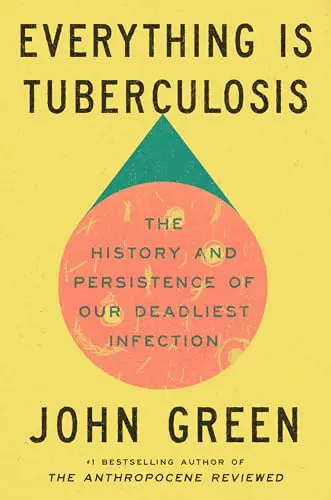
Everything Is Tuberculosis: The History and Persistence of Our Deadliest Infection
John Green
Tuberculosis has been entwined with humanity for millennia. Once romanticized as a malady of poets, today tuberculosis is seen as a disease of poverty that walks the trails of injustice and inequity we blazed for it.
In 2019, author John Green met Henry Reider, a young tuberculosis patient at Lakka Government Hospital in Sierra Leone. John became fast friends with Henry, a boy with spindly legs and a big, goofy smile. In the years since that first visit to Lakka, Green has become a vocal advocate for increased access to treatment and wider awareness of the healthcare inequities that allow this curable, preventable infectious disease to also be the deadliest, killing over a million people every year.
In Everything Is Tuberculosis, John tells Henry’s story, woven through with the scientific and social histories of how tuberculosis has shaped our world—and how our choices will shape the future of tuberculosis.
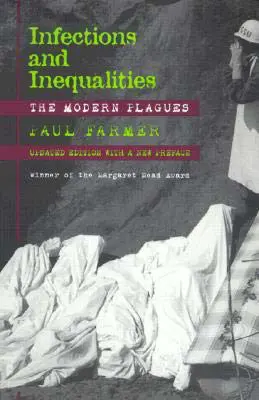
Infections and Inequalities: The Modern Plagues
Paul Farmer
Paul Farmer has battled AIDS in rural Haiti and deadly strains of drug-resistant tuberculosis in the slums of Peru. A physician-anthropologist with more than fifteen years in the field, Farmer writes from the front lines of the war against these modern plagues and shows why, even more than those of history, they target the poor. This "peculiarly modern inequality" that permeates AIDS, TB, malaria, and typhoid in the modern world, and that feeds emerging (or re-emerging) infectious diseases such as Ebola and cholera, is laid bare in Farmer's harrowing memoir rife with stories about diseases and human suffering.
Using field work and new scholarship to challenge the accepted methodologies of epidemiology and international health, Farmer points out that most current explanatory strategies, from "cost-effective treatment" to patient "noncompliance," inevitably lead to blaming the victims. In reality, larger forces, global as well as local, determine why some people are sick and others are shielded from risk. Yet this moving autobiography is far from a hopeless inventory of insoluble problems. Farmer writes of what can be done in the face of seemingly overwhelming odds, by physicians and medical students determined to treat those in need: whether in their home countries or through medical outreach programs like Doctors without Borders. Infections and Inequalities weds meticulous scholarship in medical anthropology with a passion for solutions—remedies for the plagues of the poor and the social illnesses that have sustained them.
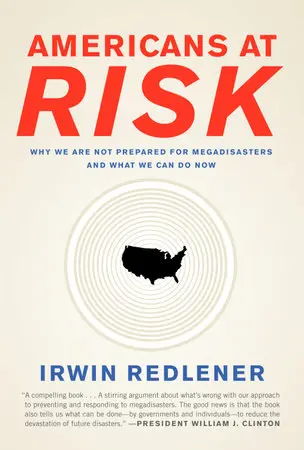
Americans at Risk: Why We Are Not Prepared for Megadisasters and What We Can Do
Irwin Redlener
This important book by one of our leading experts on disaster preparedness offers a compelling narrative about our nation’s inability to properly plan for large-scale disasters and proposes changes that can still be made to assure the safety of its citizens.
Five years after 9/11 and one year after Hurricane Katrina, it is painfully clear that the government’s emergency response capacity is plagued by incompetence and a paralyzing bureaucracy. Irwin Redlener, who founded and directs the National Center for Disaster Preparedness, brings his years of experience with disasters and health care crises, national and international, to an incisive analysis of why our health care system, our infrastructure, and our overall approach to disaster readiness have left the nation vulnerable, virtually unable to respond effectively to catastrophic events. He has had frank, and sometimes shocking, conversations about the failure of systems during and after disasters with a broad spectrum of people—from hospital workers and FEMA officials to Washington policy makers and military leaders. And he also analyzes the role of nongovernmental organizations, such as the American Red Cross in the aftermath of Katrina.
Redlener points out how a government with a track record of over-the-top cronyism and a stunning disregard for accountability has spent billions on “random acts of preparedness,” with very little to show for it—other than an ever-growing bureaucracy. As a doctor, Redlener is especially concerned about America’s increasingly dysfunctional and expensive health care system, incapable of handling a large-scale public health emergency, such as pandemic flu or widespread bioterrorism. And he also looks at the serious problem of a disengaged, uninformed citizenry—one of the most important obstacles to assuring optimal readiness for any major crisis.
Redlener describes five natural and man-made disaster scenarios as a way to imagine what we might face, what our current systems would and would not prepare us for, and what would constitute optimal planning—for government and the public—in each situation. To see what could be learned from others, he points up some of the more effective ways countries in Europe, Asia, and the Middle East have dealt with various disasters. And he concludes with a real prescription: a nine-point proposal for how America can be better prepared as well as an addendum of what citizens themselves can do.
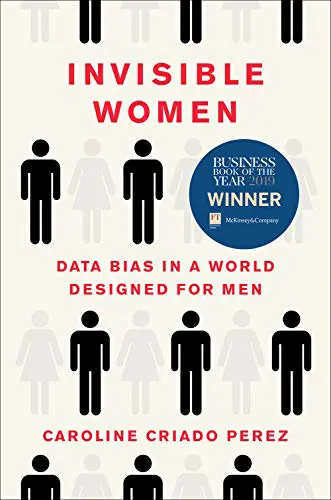
Invisible Women: Data Bias in a World Designed for Men
Caroline Criado Perez
Data is fundamental to the modern world. From economic development to health care to education and public policy, we rely on numbers to allocate resources and make crucial decisions. But because so much data fails to take into account gender, because it treats men as the default and women as atypical, bias and discrimination are baked into our systems.
And women pay tremendous costs for this insidious bias: in time, in money, and often with their lives.
Celebrated feminist advocate Caroline Criado Perez investigates this shocking root cause of gender inequality in Invisible Women. Examining the home, the workplace, the public square, the doctor’s office, and more, Criado Perez unearths a dangerous pattern in data and its consequences on women’s lives.
Product designers use a “one-size-fits-all” approach to everything from pianos to cell phones to voice recognition software, when in fact this approach is designed to fit men. Cities prioritize men’s needs when designing public transportation, roads, and even snow removal, neglecting to consider women’s safety or unique responsibilities and travel patterns. And in medical research, women have largely been excluded from studies and textbooks, leaving them chronically misunderstood, mistreated, and misdiagnosed.
Built on hundreds of studies in the United States, in the United Kingdom, and around the world, and written with energy, wit, and sparkling intelligence, this is a groundbreaking, highly readable exposé that will change the way you look at the world.
The Calling: Why Healthcare Is So Special
Quint Studer
If there’s one thing all healthcare people have in common, it’s a great desire to be useful and helpful. This is our “calling", and we are born with it inside us. We enter the profession with a full emotional bank account. The challenge is to keep our sense of passion and purpose high so we can fully engage in the work we feel called to do.
In his new book, The Calling: Why Healthcare Is So Special, Quint Studer has pulled together a lifetime’s worth of stories and insights designed to keep that emotional bank account overflowing - or to refill it for those who are running on empty.
First, Studer zeroes in on the barriers that can hold us back: from the pace of change, to our normal psychological and emotional defense mechanisms, to the organizational challenges that keep us from being the best we can be. Then he moves on to replenishers. These are the mind shifts, tools, techniques, and best practices that help all of us in healthcare.
The book is for anyone and everyone who works in healthcare. Written in the practical, easy-to-process style that has become Studer’s trademark - and packed with heartfelt stories that showcase the many gifts of healthcare people - the book will help clinicians and non-clinicians alike to keep their emotional bank accounts full.
Being Mortal
Atul Gawande
Medicine has triumphed in modern times, transforming birth, injury, and infectious disease from harrowing to manageable. But in the inevitable condition of aging and death, the goals of medicine seem too frequently to run counter to the interest of the human spirit. Nursing homes, preoccupied with safety, pin patients into railed beds and wheelchairs. Hospitals isolate the dying, checking for vital signs long after the goals of cure have become moot. Doctors, committed to extending life, continue to carry out devastating procedures that in the end extend suffering.
Gawande, a practicing surgeon, addresses his profession's ultimate limitation, arguing that quality of life is the desired goal for patients and families. Gawande offers examples of freer, more socially fulfilling models for assisting the infirm and dependent elderly, and he explores the varieties of hospice care to demonstrate that a person's last weeks or months may be rich and dignified.
The Immortal Life of Henrietta Lacks
Rebecca Skloot
Her name was Henrietta Lacks, but scientists know her as HeLa. She was a poor black tobacco farmer whose cells--taken without her knowledge in 1951--became one of the most important tools in medicine, vital for developing the polio vaccine, cloning, gene mapping, and more. Henrietta's cells have been bought and sold by the billions, yet she remain virtually unknown, and her family can't afford health insurance. This phenomenal New York Times bestseller tells a riveting story of the collision between ethics, race, and medicine; of scientific discovery and faith healing; and of a daughter consumed with questions about the mother she never knew.
The Speckled Monster
Jennifer Carrell
The Speckled Monster tells the dramatic story of two parents who dared to fight back against smallpox. After barely surviving the agony of smallpox themselves, they flouted eighteenth-century medicine by borrowing folk knowledge from African slaves and Eastern women in frantic bids to protect their children. From their heroic struggles stems the modern science of immunology as well as the vaccinations that remain our only hope should the disease ever be unleashed again.
Jennifer Lee Carrell transports readers back to the early eighteenth century to tell the tales of Lady Mary Wortley Montagu and Dr. Zabdiel Boylston, two iconoclastic figures who helped save London and Boston from the deadliest disease mankind has known.
The Coming Plague: Newly Emerging Diseases in a World Out of Balance
Laurie Garrett
Unpurified drinking water. Improper use of antibiotics. Local warfare. Massive refugee migration. Changing social and environmental conditions around the world have fostered the spread of new and potentially devastating viruses and diseases—HIV, Lassa, Ebola, and others. Laurie Garrett takes you on a fifty-year journey through the world's battles with microbes and examines the worldwide conditions that have culminated in recurrent outbreaks of newly discovered diseases, epidemics of diseases migrating to new areas, and mutated old diseases that are no longer curable. She argues that it is not too late to take action to prevent the further onslaught of viruses and microbes, and offers possible solutions for a healthier future.