


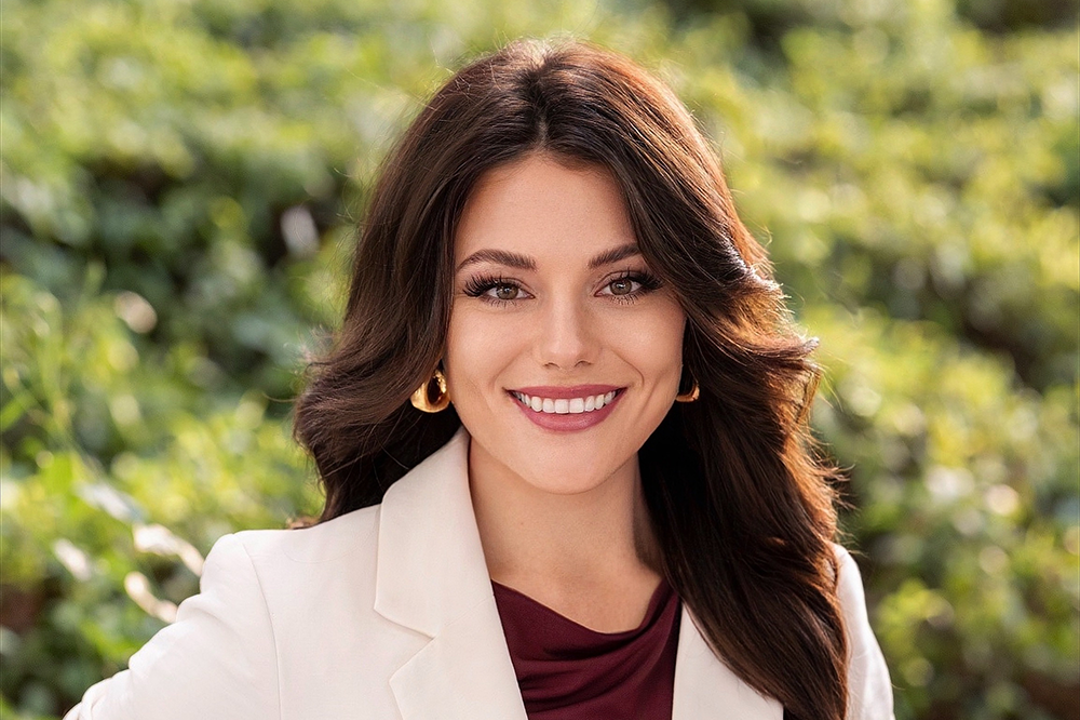
A 2019 Radiologic and Imaging Sciences grad, Katelyn Earl says her very first passion was photography.
"I loved capturing detail and composition through a lens. As I learned more about anatomy in high school, I realized I was equally fascinated by the human body and drawn to the medical field," she says. "My dream at the time was to become an orthopedic surgeon, combining precision and creativity to help people heal. However, medical school wasn’t financially feasible for me and my family, so I looked for a path that could merge my two passions. Radiology became the perfect intersection. It allowed me to apply my technical eye for imaging while contributing meaningfully to patient care and medical innovation."
What led you to choose USI? Growing up in a rural area, Evansville was our “weekend outing” destination. Every time we drove past the USI campus, it felt like its own small city, and I knew from a young age that I wanted to attend college there.
Did you work in patient care before finding your current job at Edwards Lifesciences? I worked in diagnostic X‑ray at Deaconess Midtown and Gateway after graduating from my program at USI. I spent about 5-6 months in X‑ray before transitioning into CT, where I worked for roughly 2.5 years in float, second shift and weekend‑option thirds.
After working through COVID, I made the decision to step away from direct patient care and joined 3DR Labs, a company that provides 3D post‑processing reconstructions for CT and MRI imaging across the country. Over the course of four years, I advanced from a Level 1 technologist into the role of Cardiac Center of Excellence Lead Technologist. In that position, I supported technologists and corrected protocol processing errors for studies such as transcatheter heart valve replacements (TAVR), calcium scoring, pediatric cardiac assessments, pulmonary vein mapping for ablations and more.
After completing my master’s in health administration at USI, Edwards Lifesciences reached out to me via LinkedIn and offered me the role of Senior Imaging Engineer based on my CT background and 3D post‑processing experience.
What is a typical day like at Edwards Lifesciences? Edwards Lifesciences is a company focused on developing technologies that support or replace the function of the heart’s valves and chambers—essentially devices that improve or restore how the heart moves blood through the body.
As a Senior Imaging Research and Development Engineer, my work centers on supporting imaging needs for early‑stage device development, validating imaging protocols and ensuring that the imaging used in research accurately reflects the anatomy and clinical scenarios the devices are designed for. In addition to protocol development and analysis, I also participate in chronic studies by operating a CT scanner on‑site for research imaging and device testing. This hands‑on involvement allows me to directly capture and evaluate imaging data used in prototype validation and long‑term device performance studies, bridging the gap between engineering design and clinical application.
How does it feel to know you are part of helping people with cardiovascular disease? It’s incredibly meaningful to know that my work contributes to helping people living with cardiovascular disease. Even though I’m no longer in direct patient care, I still feel connected to improving patient outcomes—just from a different angle.
Anybody you want to thank? Reflecting on my journey, I truly believe I couldn’t have reached this point in my career without the unwavering support of the incredible faculty and mentors at USI. I relied heavily on my professors, and they became the community I leaned on most. They helped me feel a sense of belonging and instilled in me the confidence to chase a career path that once felt completely unattainable.
In the Radiologic and Imaging Sciences Program, I am particularly grateful to:
Anything else you want to add? Ultimately, USI provided far more than just a degree; it offered a community that believed in my potential and supported my growth into the professional I am today.